The ABC's of Identity
Philip Wang & Eric Wang | BOPOMOFO Cafe

NHM Online Presents L.A. Culture in a Cup, a year-long initiative celebrating the stories of the diversity of Los Angeles and its people through the lens of the beverages and their significant vessels that bring us together.
Co-founded by Philip and Eric Wang, BOPOMOFO Cafe serves as a physical extension of their mission to elevate Asian American narratives. Long before pouring boba, Philip spent over a decade pioneering digital representation through Wong Fu Productions, an independent production company he founded in the early 2000s, well before YouTube. By creating the on-screen representation of Asian Americans that he and his peers craved, Wong Fu built a massive, dedicated online community.
Recognizing the need to translate that digital sanctuary into a tangible "third space," Philip partnered with his longtime friend Eric, who brought years of corporate finance experience and supported Wong Fu's live events and tours behind the scenes. When designing a menu that fused traditional Taiwanese recipes with American fast-food nostalgia, the founders realized they were essentially creating "ABC" food, a nod to the term "American-born Chinese." "We couldn't call it ABC Cafe. That's so generic," Philip recalls. "And Eric said, 'What if we called it BO-PO-MO-FO? Because these are the ABCs of Mandarin.'"
By using premium, fresh ingredients to redefine beloved cultural staples, Philip and Eric prove that true fusion isn't a lazy culinary gimmick, but an authentic reflection of their everyday bicultural lives.
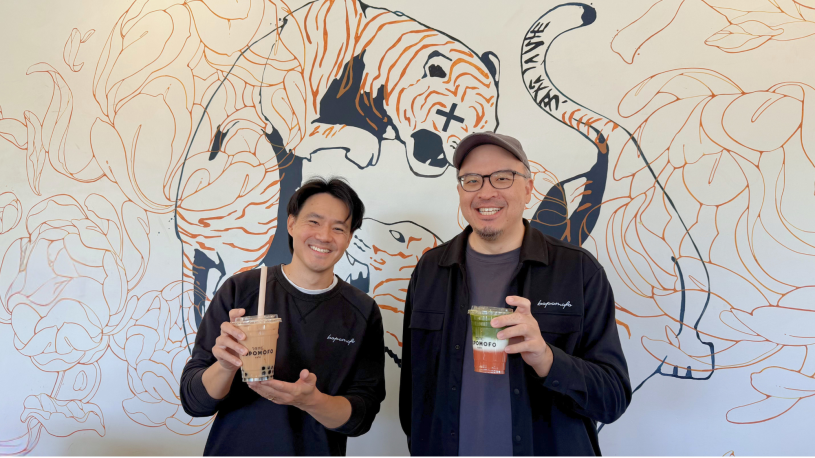
The spaces that Asian Americans have built up in the communities and the enclaves... that's something that is super important to us, and we are very proud of that. Just the fact that we get to be included and part of the L.A. story is important. We're just that latest version, and someone will be after us, too, and keep it going. I think that's an honor, honestly. We just try to deserve that honor every day.
Philip Wang
Tell us about your oldest memory of tasting boba.
Philip: Boba was first coming to America around Y2K, and my first time having it was at a shop in Berkeley. I remember feeling so empowered by seeing this very Asian thing young people in America were doing. It felt like a barbershop for our community—something uniquely ours. As a kid with strict parents, we didn't get to have cool snacks like Dunkaroos or Oreos, so going to a boba shop felt like a rare treat, and almost a bit rebellious. It was young, it was hip, and it hit me all together.
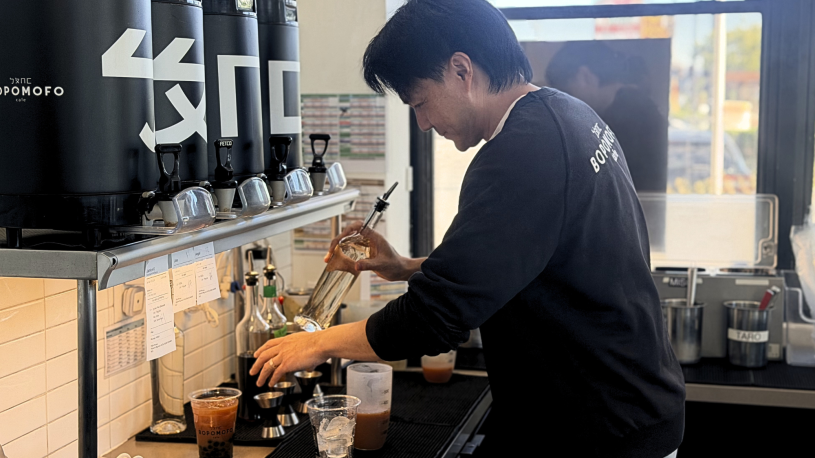
Eric: I remember when we moved out to Rowland Heights, there weren't a lot of Asian markets, so every weekend we would still drive back to the San Gabriel Valley for grocery shopping and go to Ten Ren. Ten Ren was a Taiwan-based brand, obviously the place where boba drinks all started, and they were a major purveyor of teas in general. They weren't serving 100 different boba drinks; it was just one milk tea with pearls, and there was no fancy-schmancy—that was just the drink to order.
I have an early memory of walking across the street with my family, leaving Ten Ren. It was a hot day, and we would only buy one cup of boba to share amongst the three of us. I got just a couple of sips in, but I always wanted more! Having that really creamy dairy in that milk tea felt familiar and was just pleasant.
Philip: There was definitely a first wave of places, and we have to give respect to those who came before us. The ones that kind of started the flavor trend were places like Tapioca Express, Lollicup, and Tea Station.

Photo courtesy of Philip Wang
Before he co-founded BOPOMOFO Cafe, a teenage Philip Wang (pictured here, circa 2001) discovered the magic of boba at Sweetheart Cafe in Berkeley around 2001. Growing up in the suburb of Walnut Creek, driving out to get this newly imported drink felt like a "rebellious" and rare treat. For Philip, seeing a vibrant space where young Asian Americans were hanging out felt incredibly empowering—akin to a community barbershop—and planted the early seeds for the inclusive "third place" he would eventually build in Los Angeles.

Photo courtesy of BOPOMOFO
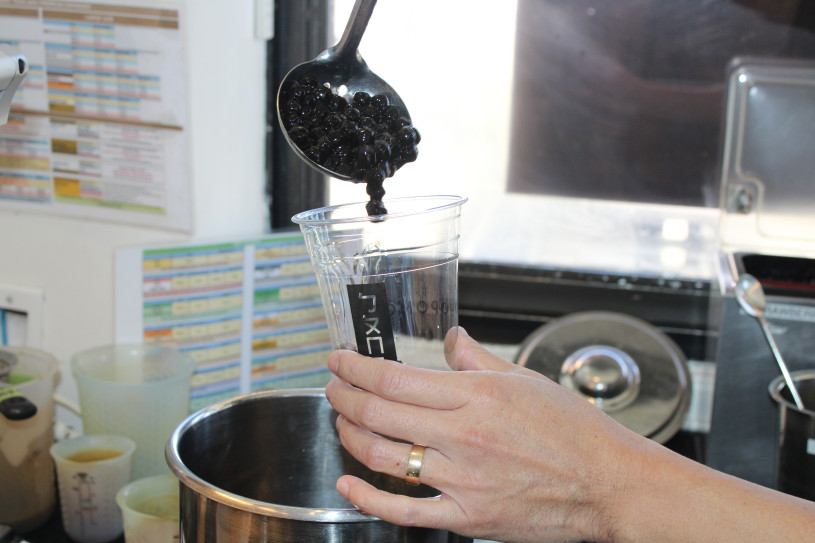
Before today's highly customized menus, global tea pioneer Ten Ren offered a much simpler approach in the San Gabriel Valley. "There was no fancy-schmancy," Eric Wang recalls. "It was just one milk tea with pearls." That historic brand and the vivid memory of splitting a single cup of creamy jasmine milk tea with his two siblings on a hot day represent the foundational taste of his childhood. At BOPOMOFO, the founders are meticulous in their preparation, ensuring that every batch of fresh boba (pictured here) is "done well, done right" and crafted without cutting corners.
Philip, you spent a decade building a massive digital community with Wong Fu Productions, while Eric built a career in corporate finance. How did your two completely different worlds collide to bring a physical cafe to life?
Philip: Before Wong Fu Productions had an office, I would edit and write scripts at boba shops. We didn't have fancy coffee shops here in the 626; we had a lot of boba shops, and I would always notice things. It added to this mental list of ideas—if I had my own place, this is what I would do. Around 2015, Wong Fu was doing well, and I wanted to bring our audience into something more tangible and experiential.
We had the marketing and the audience, but I knew Eric had a background in finance and a deep love for food—he was the friend who could cook a lot better than everyone else in our 20s. I told him, "You have these pieces that I'm missing... what if we actually came together for this project?"
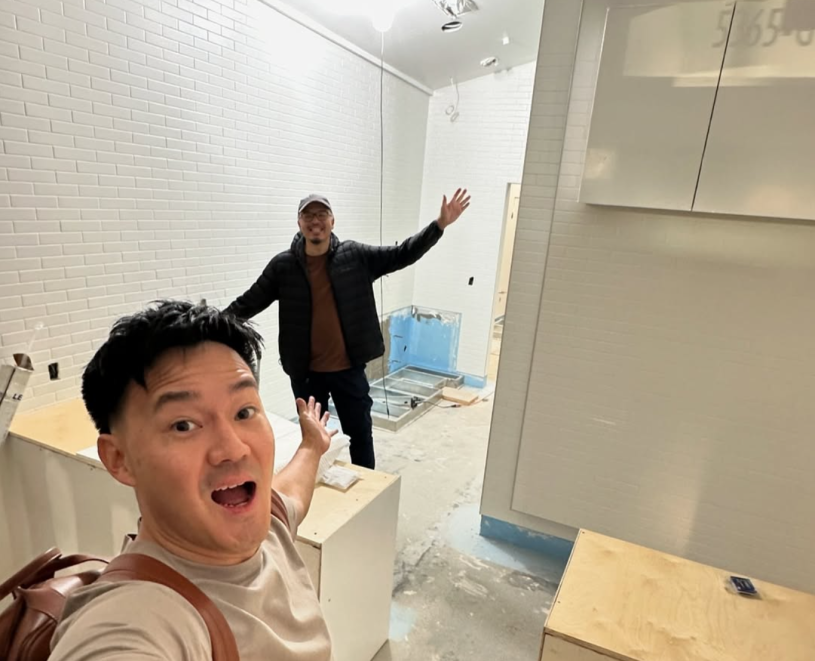
Eric: I got stuck in corporate finance for about 12 or 13 years, but in my free time, I was always working with other filmmakers and creatives. It was the rebellious side of me. I wanted to go try and explore what else I could do creatively. Philip and I naturally found ways to work together over the years. When the idea for a brick-and-mortar space came up, I voluntarily decided to leave my corporate job. In 2016, we decided we just needed to bite the bullet and jump into the deep end pool.
How does your cultural experience show up in the specific ingredients you use?
Eric: A perfect example is that we don't offer regular milk on our menu; all of our dairy is lactose-free milk. That was a really huge decision from the get-go. I always grew up drinking milk, and I don't think my parents knew what lactose intolerance was. I remember being in school, having stomach aches and wondering, "What's going on here?" So for us, updating these drinks meant using fresh fruit and vegetable juices, avoiding high-fructose corn syrup, and using lactose-free milk. We wanted to pay homage to our upbringing while offering a fresher, culturally forward take.
Philip: At the core, our culture shows up in every item through some type of fusion. And that word, "fusion," gets a bad rep because it's often done lazily or without fully understanding the inspiration and traditional use of ingredients. When done right, "fusion" can result in amazing and delicious creations. In many ways, being Asian American, our entire existence is a "fusion"!
What drink tells the story of BOPOMOFO the best?
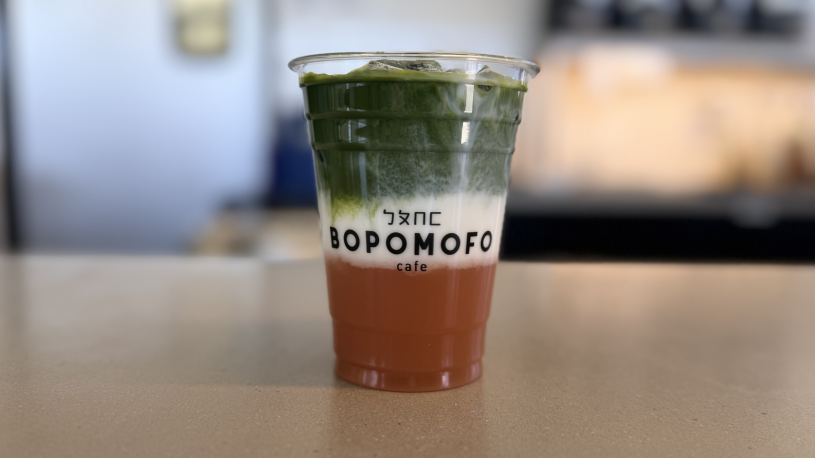
Philip: I would say the classic Assam Milk Tea is the base of how it all started. The original, old-school way it was done usually involved a lot of sugar and non-dairy creamer. We updated it for a modern palate using lactose-free milk and cane sugar. But the Bala Matcha is a great example of where we are going. "Bala" means "guava" in Taiwanese, and we use fresh guava juice mixed with milk and matcha. It's tropical, creamy, and culturally forward.

Natural History Museums of Los Angeles County
By utilizing fresh guava juice, Philip intentionally distances Bopomofo from industry norms. "Most boba shops... all go to the same catalog of wholesalers, and they're like, 'Okay, yeah... we just gotta get the blueberry syrup, we gotta get the mango syrup,'" he explains. Instead, every layer of the Ba-La Matcha utilizes fresh ingredients to ensure the flavor has a genuine, crafted story behind it.

Natural History Museums of Los Angeles County
For Philip Wang, developing the striking layers of the Ba-La Matcha wasn't just about taste—it was an exercise in visual storytelling. When developing new concepts, the founders were highly intentional about "how this drink was constructed, how did it look visually." Today, that meticulous attention to aesthetic detail has made the tropical, tricolored beverage their best-selling drink to date

Natural History Museum of Los Angeles County
The white center of the Ba-La Latte holds a deeply personal—and practical—story. Recognizing that lactose intolerance is highly prevalent in the Asian American community, the founders made the "really huge decision from the get-go" to overcome supply chain challenges and use only lactose-free dairy. It is a subtle nod to their community that ensures everyone can comfortably enjoy the creamy textures of their childhoods.

Photo Courtesy of BOPOMOFO
Philip shared that he is continually amazed by how quickly their childhood staple has crossed into the broader cultural zeitgeist. "It's kind of crazy to see how much Boba in just the last five years, and matcha specifically "have just blown up," Philip notes. Today, their carefully crafted drinks are in such high demand that BOPOMOFO is catering everything from local Bar Mitzvahs to the Emmy Awards—a mainstream crossover Philip says you "would have never heard of just ten years ago."
Eric: For me, it is the Carrot Matcha Latte—just fresh carrot juice, milk, and matcha on top. The inspiration came from our frequent trips to Taiwan as adults. They have a very popular street-vendor drink made with papaya milk, and I wanted to recreate it. At the time, we didn't know how to source fresh papaya at a good price, so the next best thing was carrot juice. It has a similar flavor; it's creamy on its own; it's orange; and we knew we wanted to put matcha in it, too. Matcha has specifically blown up over the last couple of years, and we wanted to push the envelope with it. We were sort of the first to introduce fresh fruit and vegetable juices into boba drinks. I feel like that drink resonates with us quite a bit because we are testing the waters, using fresh ingredients, and doing things differently.

Natural History Museums of Los Angeles County
When Eric Wang first introduced fresh vegetable juice to the local boba scene, it was a major head-turner. "It was a bit of a sell at first," Eric remembers of the Carrot Matcha Latte's bright orange hue. But the risk paid off: by offering a fresh, healthy alternative to artificial powders, the vibrant drink quickly developed a devoted "cult following" among regulars.

Natural History Museums of Los Angeles County
We didn't really care too much if we were the first, if it wasn't really accepted," Eric says of their experimental menu. Pouring earthy matcha over fresh carrot juice perfectly visualizes his desire to creatively "push the envelope" beyond his former career in corporate finance, treating the cafe's beverage menu as a canvas for bicultural exploration.

Eric describes that their drinks are a culinary hybrid of modern American fast food and comforting Taiwanese home cooking—"little stories kind of sprinkled throughout our venue" that celebrate the Asian American experience in every cup.

Photo Courtesy of BOPOMOFO
For the founders, creating inventive drinks with fresh ingredients wasn't about rejecting the traditional mom-and-pop shops that paved the way, but rather building the "next iteration" of them. As Philip explained, the team wanted to stand out by having "reasons and stories" for their creations, emphasizing the deep "intentionality behind why we're putting this on our menu, or what makes this flavor special."
What do you hope the legacy of BOPOMOFO will be for the people who walk through your doors?
Philip: I really want people to know that we care about our products, our people, our purpose, and our place. We put so much effort into making sure our drinks are done right, but we are also a 'third space' where people come to make memories. People have taken their engagement photos here, caught up with family, and even had breakup chats here. I love that we get to be a reason people are coming together.
Eric: Our employee experience is also extremely important to us. We want our team and our community to know we're pushing boundaries, testing new approaches, and doing things differently. We want to run an admirable company, and ultimately, we just want everyone to walk away satisfied.
Philip: The spaces that Asian Americans have built up in these communities are super important to us, and we are very proud of that. We are just the latest ripple in a long story that started with the first immigrants who built these neighborhoods. Someone will come after us to keep it going, too, but just being included in the L.A. story is an honor. We just try to deserve that honor every day.
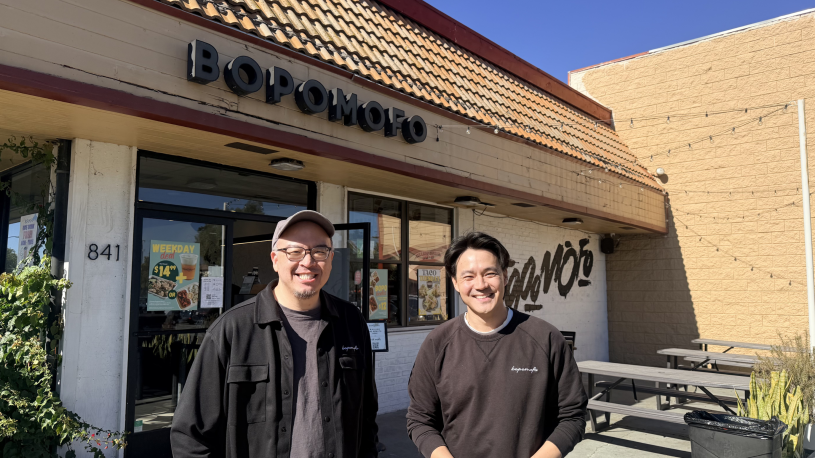
Explore more from BOPOMOFO Cafe
To experience the artistry of fresh, elevated boba and taste Ba-La Matcha and Carrot Matcha Latte for yourself, visit Philip and Eric at BOPOMOFO Cafe in San Gabriel or at their locations throughout Southern California, including their newest location in Downtown Disney.
What's your L.A. Cup story?
Do you know an L.A. beverage crafter who lovingly connects to your community? Do you want to share your favorite experience at BOPOMOFO Cafe? Join the conversation by tagging @NHMLA with #LACultureinaCup, and your story could be featured next!