
HIGHLIGHTING THE MAKERS & MIXERS WHO BRING US TOGETHER
Ginger and James Dimapasok | Café 86

Ginger Dimapasok is the co-founder and president of Café 86, the Filipino dessert and drink business she started with her husband, James, in Chino Hills in 2014. What began as a small cafe, with just enough room for 10–15 seats, has grown into a business with dozens of locations across Southern California and beyond. For Ginger, Café 86 has always been more than just serving tasty treats and beverages. It is about creating connection, sharing Filipino culture, and building a sense of belonging in Los Angeles around the most cherished and delicious parts of her family’s culture.
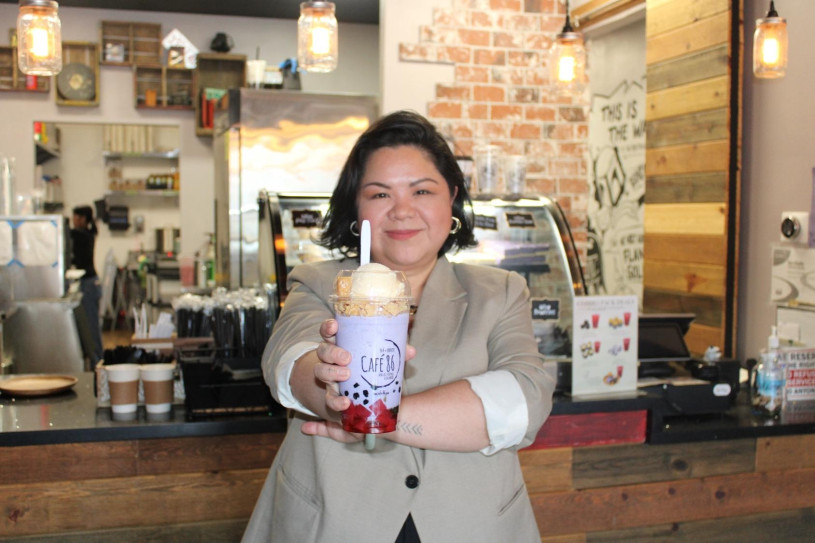
My story isn't as exciting as everyone else's. My family and I would visit the U.S. occasionally to see our family who lived here. My mom would visit her sisters in Los Angeles, so we'd come maybe once every three or four years. It's not easy to come to the States—the travel, the plane tickets—but we would come and visit our family.
As I got older, I decided I wanted to pursue my education here, specifically culinary arts. I came to the U.S. around 1999 to study culinary arts in New York and hopefully pursue a career. That's when I met my husband, and I ended up staying here. We got married in 2001.
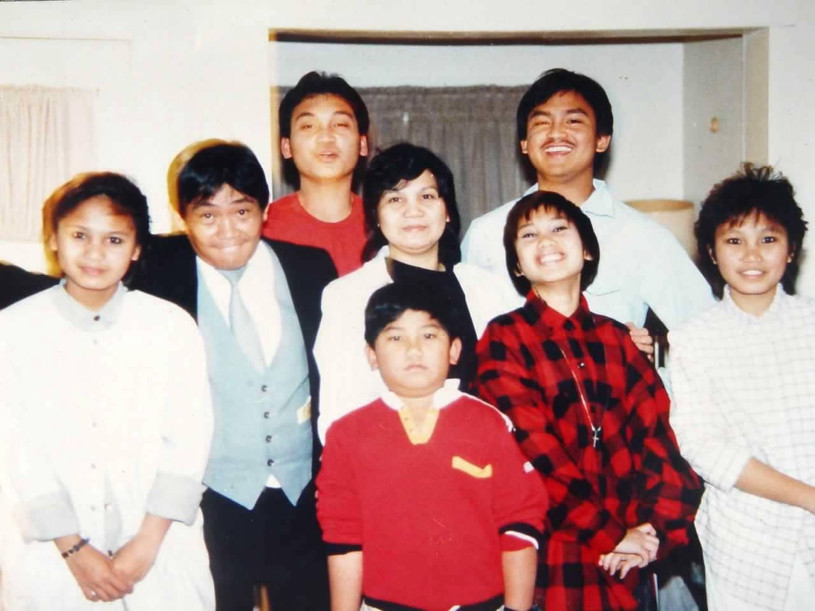
My husband immigrated here when he was about four years old with his family. His mom came to the United States first and spent about four years working here before the whole family followed. They were six kids, and they went through a lot together—living in a one-bedroom apartment and sharing a two-door car with a family of eight.
We recently went through Historic Filipinotown, where they first lived, and they showed us the old house. They talked about walking to school and being latchkey kids. It's such a different time because even our kids, as children of immigrants, live very differently now.
I've always thought Los Angeles was an immigrant town, built by immigrants. I'm just grateful to be here and to have a business here. Opening a business wasn't originally part of the plan, but I guess it's part of the story.
This has always been an immigrant town...built by immigrants.
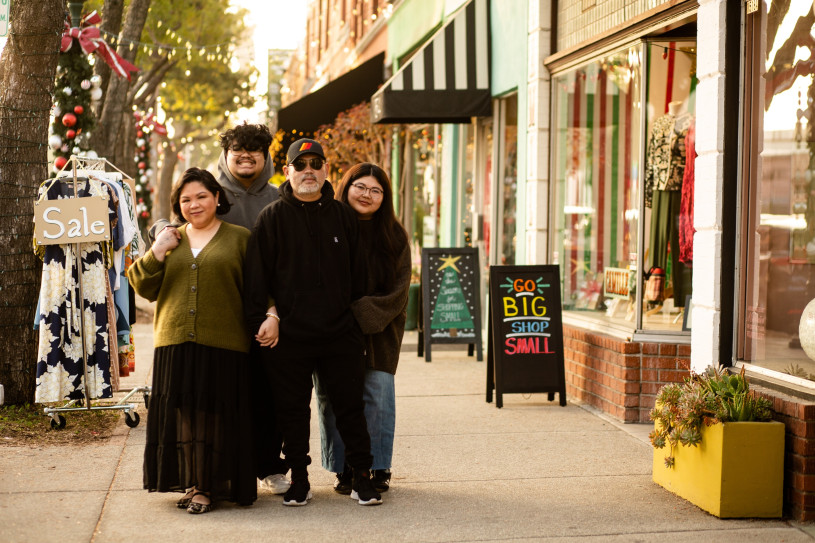
It took a while for Café 86 to open. We were married in 2001, and we didn't have kids until 2007. My husband was working a corporate job in computer sales, and I was a stay-at-home mom. He reached a point in his career where he started thinking, “I think we just need to start something that belongs to us.” And a boba shop sounded easy.
So that's what we did. But it was by no means easy. It was one of the hardest things we've ever done, and it still is. But we're grateful for the journey and grateful that we've been able to sustain it through everything we've gone through—the pandemic, the economy, all the ups and downs.
When we opened Café 86 in 2014, we opened it in our hometown of Chino Hills. It was a 10- to 15-seat shop. I remember writing the business plan while my husband was doing the math. He explained that, to keep the business alive, we had to make sure we filled those 15 seats.
Café 86 was also built around my husband's love of car meets—a community of guys who would park their old cars, pop the trunks and hoods, look at each other's engines, and talk about their cars. The name comes from his 1986 Toyota Corolla. Originally, it was about having a place for his car meets, so Café 86 was really built on community and connection. And when you build a Filipino cafe, you build a venue where food creates that connection.
We actually have a big annual car meet that we call 86 Day. It's on the anniversary of Café 86. It's a big celebration for us because it commemorates where we started as a car community. Big car meets across all the locations happen on 86 Day.
When Café 86 was built, it was really built on community and connection.

Café 86
James' 1986 Toyota Corolla sits outside the original Chino Hills location before Café 86 opened its iconic doors in 2014.

Café 86
Ginger and James take a moment to proudly pose during the successful opening day of their first Café 86 in Chino Hills in 2014.

Café 86
It’s more than just a car meet—it’s family. Every 86 Day celebrates and shares Filipino-American culture from the parking lot to the pastry case.
After we opened in Chino Hills, we started hearing from people coming from different places. We naturally started having conversations about whether there was a need for us to expand. In 2015, our second year, we opened our Pasadena location. Then, in 2016, we opened Artesia. For the first 10 years, we opened one store every year.
It was really about having conversations, hearing about the demand that might be out there, taking the risk, and opening our doors in those locations. And thankfully, we were welcomed with open arms. We've been able to serve not just the Filipino community, but also share our culture with non-Filipinos. We get to share ube, calamansi, and all these flavors that we have to offer.
That's been exciting—trying to figure out the best way to serve the Filipino community while also expanding beyond just Filipinos and sharing our culture with other people.
We’ve been able to serve not just the Filipino community, but also share our culture with non-Filipinos

Natural History Museums of Los Angeles County
The Northridge location of Café 86 on Reseda Blvd. is just one of the many locations you can enjoy halo-halo around Southern California.

Café 86
Crowds came out in force to support the grand opening of Café 86 at the Glendale Mall in 2023.

Café 86
Next time you're in Chula Vista, head over to E Palomar Street to get a taste of "ube done right".

Café 86
Step past the doors and into sweet purple heaven at Café 86 in Artesia.
I would say the drink that best describes Café 86 is our halo-halo. Halo-halo is one of the most traditional desserts you'll see on a Filipino menu. It's done in many different ways, but we've reimagined it in a way that's modern while still maintaining the heart and soul of what halo-halo is.
It took us about four years to put it on our menu because I was hesitant. It's such a traditional dessert, and there's so much of it out there. I didn't want to be the one to put it somewhere where it wasn't in its element or environment. But we reimagined so many things at Café 86, and when James finally said, “No, we need to just put it out there,” he was actually the one who developed the recipe. We wanted it to be different. We wanted it to work with what we have at Café 86. It became something really unique.
We were so worried that the older generations of Filipinos wouldn't love it, but the true test was our mothers. My mom is from Pampanga, the culinary capital of the Philippines, so people there are known to be really great cooks—and very tough critics of food. She loves our halo-halo, and that was like, “I don't care what everyone says. My mom likes it.”
I think that balance is exactly who Café 86 is as a brand. It allows us to honor our roots by serving this traditional dessert, but it also allows us to push the flavors forward and reintroduce them to a broader audience. Halo-halo is layered. It's vibrant. It's meant to be shared. It's really much like the community we've built within Café 86. It represents tradition and evolution, which is truly the spirit of Café 86 and the community we've built.
We wanted it to have the heart of what halo-halo was, but also carry the identity of Café 86.

Café 86
Café 86's signature halo-halo drink is a treat for the eyes and the tastebuds.

Natural History Museums of Los Angeles County
When you order halo-halo at Café 86, you're treated to a unique spin on the well-known Filipino dessert.

Natural History Museums of Los Angeles County
Topped with tapioca pearls, coconut jelly and jackfruit add distinctly Filipino flavors and textures to the colorful layers of halo-halo.

Natural History Museums of Los Angeles County
Ube ice cream provides the distinctly Filipino purple yam flavor that has become synonymous with hallo-halo. In creating their own unique version for Café 86, James Dimapasok decided to add crunch to their creation with Frosted Flakes.

Natural History Museums of Los Angeles County
A small piece of leche flan completes the halo-halo—a nod to the dessert’s layered history and the evolution of Filipino flavors.
I remember the first time I had halo-halo. I was probably six or seven years old, growing up in the Philippines. My mom opened a restaurant called Veranda. She was a businesswoman, but she also went into entrepreneurship and opened this restaurant. I remember watching my parents make halo-halo. They had this big, clunky ice shaver, and my dad would buy these huge blocks of ice. They would shave the ice and fill the cups, and back then, they made all the fillings from scratch. They would make the sweet beans and cook the jackfruit.
I remember hating it because of the beans. I was like, “Why do we have beans in a dessert?” But it was part of my mom's daily grind at the restaurant. I remember learning how to layer the dessert there. Eventually, I found myself holding the glass and eating it, sometimes removing the beans and increasing the amount of ice cream. What started as something I questioned became something I loved.
It became normal for me to have it as an afternoon snack. After school, the bus would drop us off at my mom's restaurant, and we'd sit there and snack on halo-halo and whatever else she was cooking—lumpia and all that. It became part of our daily routine, part of our morienda, our mid-afternoon snack.
What started off as something that I was questioning became something that I love.
Traditional halo-halo would have at least 10 ingredients mixed together. But what we didn't want to be was something that was already out there. We wanted it to be unique. We wanted it to have the heart of what halo-halo was, but also carry the identity of Café 86.
Our version is really everything we loved about halo-halo. James likes texture, so we wanted to introduce something unique: Frosted Flakes instead of the traditional puffed rice. We hated beans in our desserts, so we removed that part. And because we're a boba shop, we added tapioca pearls. But we maintained the identity of the layers. We kept the ice cream on top that makes it special—ube ice cream—and the little piece of flan.
A couple of years ago, we did Taste the Nation with Padma Lakshmi. She wanted to learn more about halo-halo, so we talked about each of the layers we put into ours. The coconut jellies, the jackfruit—those are very Filipino. And then, when I put the little piece of leche flan on top, she said, “The ode to the colonizer.” She was pointing out something that's true about Filipino food and Filipino identity.
A lot of Filipino identity was shaped by colonization. We were a melting pot of different colonizers who came and conquered and left us, and our identity is based on every flavor that was left behind and mixed together to form what is now known as Filipino. [Personally], I've just started learning more about our pre-colonial food. And it's very good. People just need to know more about it. We need to study it because it's something we haven't really visited in the past.
Café 86 was built on the idea that food creates connection.

Natural History Museums of Los Angeles County
Café 86 has mastered making specialty drinks, inspired by Filipino flavors, that are a treat for the eyes as much as they are a treat for your taste buds. In addition to their signature Halo-Halo, the Mais Con Yelo is a popular drink that layers sweet creamed corn with a creamy vanilla slush, topped with Frosted Flakes, leche flan and Magnolia Ube ice cream.

Café 86
Adding baked goods to the Café 86 menu was a last-minute call. In addition to the coffee and tea drinks they had planned for the shop, Ginger and her niece made the brilliant decision to sell Filipino-flavored treats. It may have been the most delicious decision they ever made!

Café 86
Ube leche flan cupcakes, and halo halo bread pudding, and turon pop tarts...oh my!

Café 86
At Café 86, one can indulge in the purple, delicious bliss of skyflakes cookies, ube truffles, vegan bundts, and ube conchas.
Food creates connection, and that's something we still see every day, way beyond the car-meet days. We watch people connect, build friendships, and have reunions. We've built so many relationships and new friendships through Café 86. Every weekend, we'd watch families come and connect after church. We call it the “post-church rush,” when people come and sit with members of their church or their family and celebrate milestones with us.
What really touches my heart is when I see younger people come in and find their identity in a venue like this. They feel proud to see their culture reflected on the menu and in what they see on our social media. A lot of that is because we have kids now. They're not rooted back home the way we were, so we have to create those roots for them as Filipino Americans. We have to rebuild what we thought were our roots there and reestablish them here for them.
So it's really about creating a space of belonging for everyone. When people walk into Café 86, initially, I want them to feel happiness. But I also want them to feel pride—pride for those who see their culture represented through our stores, and excitement for those who aren't familiar with our culture and are seeing something new and trying something new for the first time.
What really touches my heart is when I see the younger people come in and find identity in a venue like this.

Café 86
Packed tables, steady lines, and an endless stream of ube treats—a daily scene that captures Café 86’s humble beginnings as a neighborhood coffee and tea shop into a cornerstone of modern Filipino-American food culture.

Café 86
Dedicated, appreciated, and essential. Café 86 builds its business on a culture of mutual respect, treating employees like extended family rather than just staff.

Café 86
Ginger and James recognize that Café 86’s real strength lies in its people. Café 86 credits much of its lasting cultural footprint to the dedicated staff who bring the brand’s vision to life every day.
I'd love to see Café 86 become as accessible as Starbucks and hear people say, “I'm having ube for dessert,” just as normally as they would say, “I'm having chocolate cake for dessert.” When matcha started emerging in the food scene, I remember thinking, “Oh my gosh, they're serving matcha.” Now it's just matcha. It's normal—normal as vanilla. That's why I go for ube. Growing up, ube was our vanilla in the Philippines. Ube was my vanilla growing up. It was nothing out of the ordinary for me.
Ube is having its moment, for sure, but it's not as easy as just coloring your dessert purple. It comes with education—learning where it's coming from and learning about the different varieties. Even for us Filipinos, our knowledge about ube is so anecdotal because it was just so normal. It was a potato in our town that we were making desserts out of, but we didn't really know its origins or varieties. Even my own mom can't say much about it.
Because it's so out there now, we're all diving deeper into the knowledge of ube and learning more. I have much to learn. My next step is to go home, see a farm, talk to the farmers, and keep giving back to our country and being able to source from there. Right now, we're very proud that the ube we use is sourced from back home.
For me, Café 86 isn't just about desserts, halo-halo, and all that. It's about the storytelling that happens within the space, the representation we're able to share through our food and drinks, and showing that Filipino creativity has a meaningful place here, especially in Los Angeles. Los Angeles is such a vast cultural landscape, and for us to have implanted our identity within Los Angeles is really meaningful. Food is really this bridge that connects all of us.
Food is really this bridge that connects all of us.

Café 86
With visually striking purple confections, Café 86 quickly became a darling of digital content creators and food reviewers—making its locations a destination spot for foodies seeking unique flavors.

Café 86
In 2016, Kababayan Today—a daily talk show created for and about the Filipino-American community—featured the food, drinks, and passion of

Café 86
In 2017, Café 86 was showcased on the Food Network UK's Paul Hollywood City Bakes. Celebrity baker, Paul Hollywood, visited Café 86 to explore L.A.'s food culture and sample Ginger's famous ube treats.
Have you tasted what all the buzz is about? Dig into the vibrant, colorful flavors of ube and other Filipino favorites at your nearest Café 86!
Do you know an L.A. beverage crafter who lovingly connects to your community? What’s your favorite item on the Café 86 menu? Join the conversation by tagging @NHMLA with #LACultureinaCup!

