
A Virtual Tour of the "Cup" Collections
Explore the collections of the Natural History Museum through the lens of the vessel!

Our Cup Runneth Over
As the oldest natural history museum on the West Coast, we were bound to find examples of cups in our vast collections. However, not all of our examples might be what you are expecting. While the Being Los Angeles initiative L.A. Culture in a Cup celebrates the beverages that bring communities together, our Museum collections show that the "cup" is a form found throughout nature and history. From ancient royal wine containers to deep-sea corals shaped like goblets, take a virtual tour below to see how this ubiquitous vessel is represented in our collections.
Anthropology
GLOBAL GATHERINGS
Anthropology is the study of humankind—past and present. Here at our Museum, this department is responsible for curating archaeological and ethnographic collections acquired by and donated to the Museum. Through these collections, we learn that cups have been central to community gatherings across the globe. Cups have served not only as a vessel for food and drink but also as a vessel for community, celebration, and ceremony.
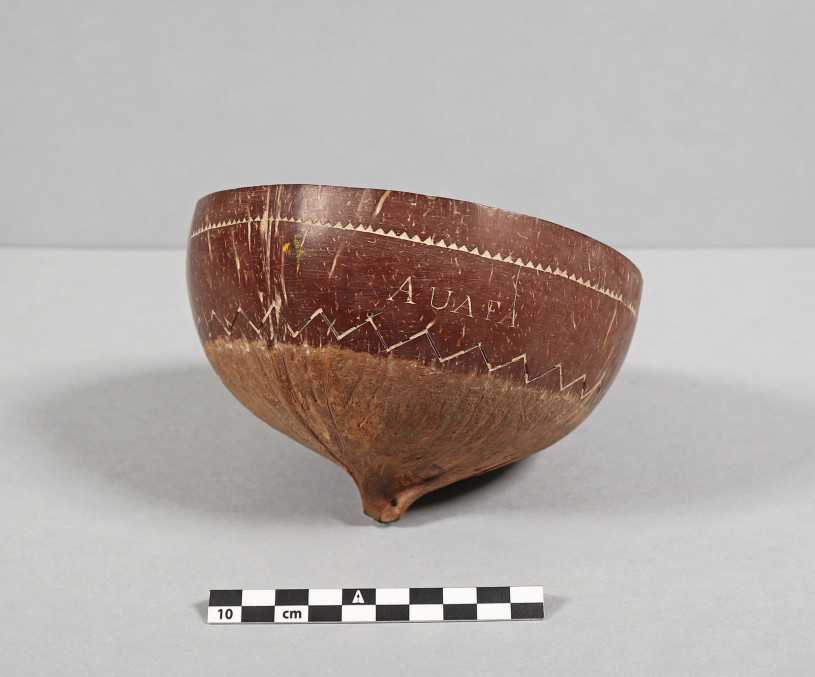
Used on important occasions to dispense the national drink "ava" (kava), this "Ipu" cup represents a deep cultural tradition of the Pacific Islands. Kava ceremonies are vital for strengthening social and political ties within the community. (Samoa c. 1880)
Natural History Museum of Los Angeles County - Anthropology Collections
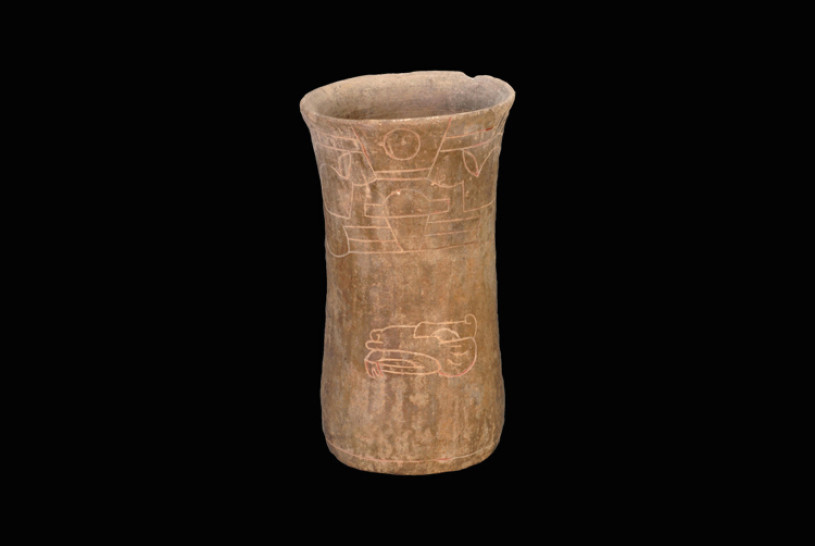
This ancient Zapotec drinking cup dates back over 2,000 years. It serves as a reminder that the act of gathering around a drink, for this example most likely a chocolate or corn-based beverage, has been a part of North American history for millennia. (Oaxaca, Mexico 200-300 B.C.)
Natural History Museum of Los Angeles County - Anthropology Collections
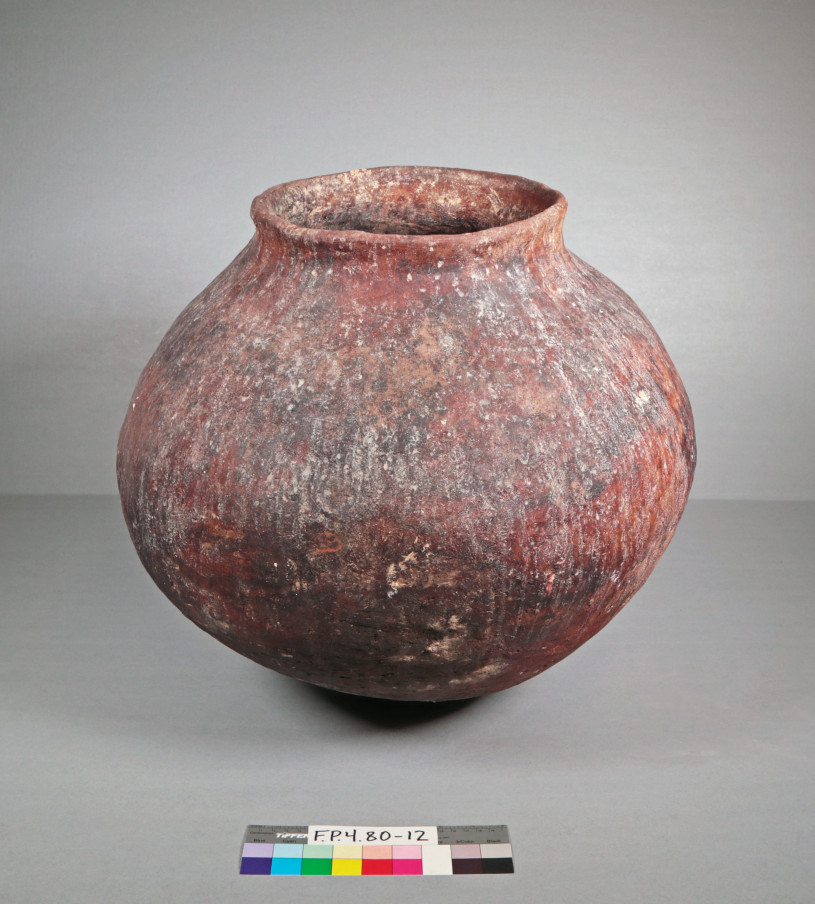
The tesgüineras or fermenting pots, like this one once utilized by the Rarámuri of Chihuahua, are an important part of making tesgüino, a traditional fermented corn beer.
Natural History Museum of Los Angeles County - Anthropology Collections
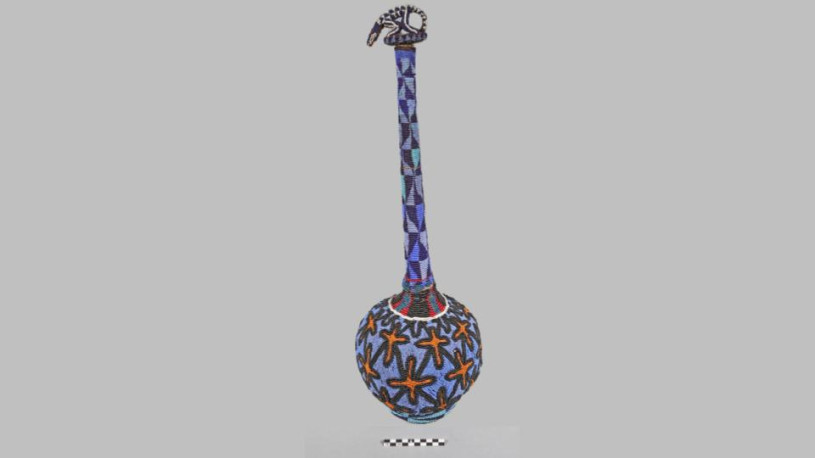
Palm wine is a cornerstone of ceremony in many West African cultures, used to bind communities together during important social gatherings. As David Baldwin, a researcher of the African collections, notes: "This is a fine example of a royal palm wine container as used by the kings of Mum (aka Bamum) in the Cameroon grasslands." (Cameroon c. 1890)
Natural History Museum of Los Angeles County - Anthropology Collections
Marine Biodiversity Center
NATURE'S GOBLETS
NHMLAC's Marine Biodiversity Center curates our collection of marine invertebrate specimens, documenting global and regional invertebrate fauna. Through these collections, we that see how—in the ocean—the "cup" shape is a successful evolutionary design, often used by stationary animals to capture food from the passing currents.

This deep-sea, solitary Cup coral, also known as Flabellum alabastrum, is shaped remarkably like an elaborate goblet. Unlike reef-building corals, these solitary polyps stand alone, using their cup-like shape to house their soft bodies.

Jean-Paul Boerekamps via iNaturalist
"Named after the shape of its stony exoskeleton, the Orange Cup Coral [or Tubastraea coccinea] is unusual because it does not host photosymbiont algae like many other corals. While its native range is the Indo-Pacific, it has become a widespread species in the Atlantic Ocean." - Ethan Kahn, DigIn Specialist
Malacology
CUP-and-SAUCER SNAILS
Our Malacology Department focuses on the study of mollusks, a diverse group of animals that includes snails, clams, octopuses, and more. The Museum's malacological collection is global in scope and reveals a tremendous diversity in shell size, shape, structure, and ornamentation. The genus Crucibulum in our collections perfectly encapsulates the "cups" theme through its unique anatomy, where the shell features an internal, funnel-like shelf that creates a literal cup-and-saucer appearance. Its scientific name, meaning "lamp" or "melting pot," further highlights the vessel-like morphology that defines this marine snail. These specimens serve as a fascinating example of how evolution can shape a protective shell into a functional "cup" for the snail's soft body.
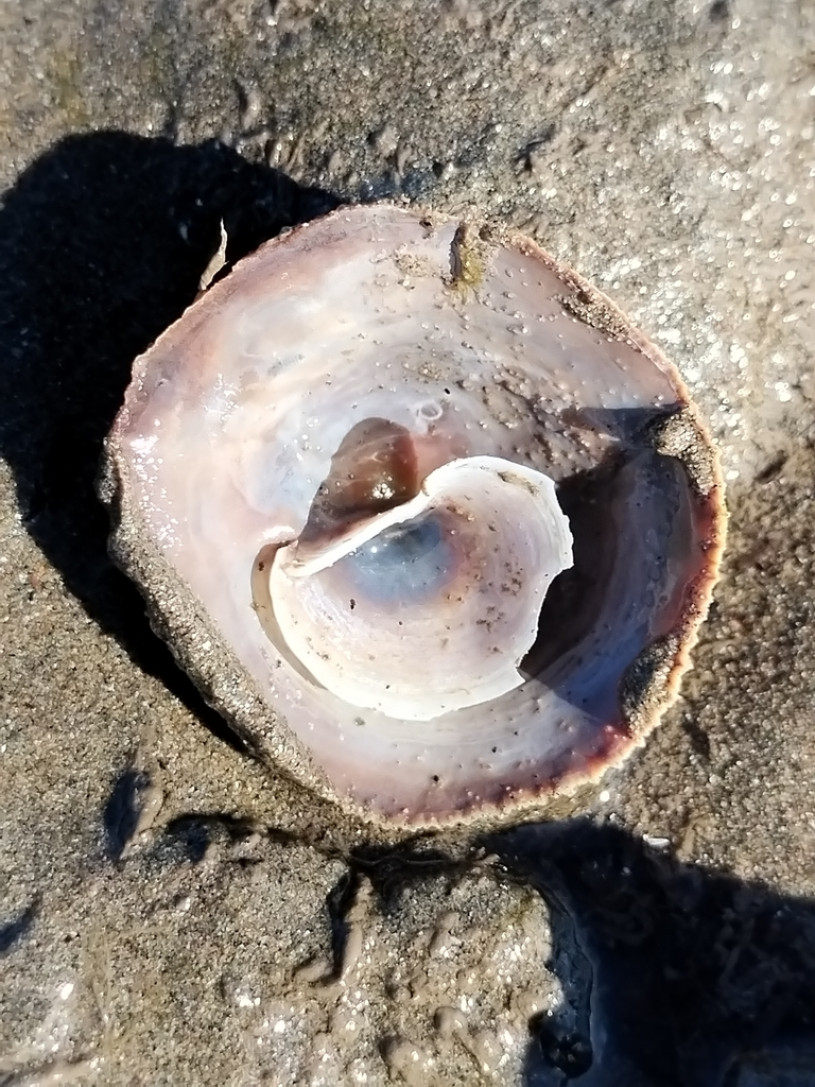
"[These are] marine snails that look like they are a cup on top of a saucer from above." - Jann Vendetti, Associate Curator of Malacology Department.
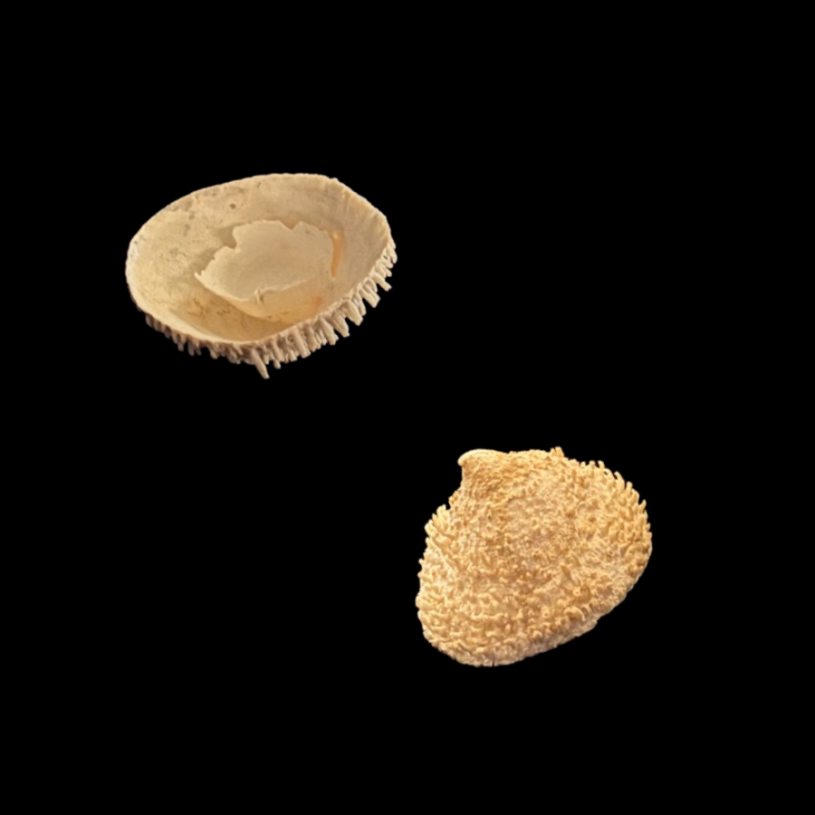
This spiny cup-and-saucer snail, also known as Crucibulum spinosum, is one of many species found in our vast Malacology collections here at our museums. This particular species is found along the Western coast of the Americans, extending from California to Chile.
Natural History Museum of Los Angeles County
Invertebrate Paleontology
ANCIENT CUPS OF THE SEA
The Invertebrate Paleontology Department of the Natural History Museum of Los Angeles County houses fossils of animals that lack a backbone, such as arthropods, molluscs, echinoderms, and corals. Here we can see that the "cup" shape has existed in the fossil record for hundreds of millions of years.

Natural History Museum of Los Angeles County
This fossilized specimen of Moapacrinus rotundatus from our Invertebrate Paleontology collection showcases the well-preserved cup (calyx) at the base, from which several thick, segmented arms extend upward. The sea lily fossil displays the characteristic robust, rounded structure of the dorsal cup and the arm segments typical of this crinoid species.

While this feather star, also known as Pontiometra andersoni, is mobile and lacks a stalk in its adult form, it is a living relative of the fossilized sea lily Moapacrinus rotundatus. Both belong to the class Crinoidea, a lineage of echinoderms that has existed for hundreds of millions of years.
Ornithology

Sandgrouse is the common name for Pteroclidae, a family of sixteen species of bird, members of the order Pterocliformes, a number of which NHM has in its vast Ornithology collection.
LIVING VESSELS
In the Museum’s Ornithology collections, we encounter some 121,000 specimens, representing over 5,400 species. The scope of the collection is particularly rich in species from North America, Africa, South America, and the Pacific Ocean. Here we discover that "cup" isn't always an object, but sometimes a behavior used for survival in harsh environments.
"Sandgrouse nest in the middle of the desert, far from water, but their young need to drink. So, in order for them to survive, the male uses special belly feathers to transport water to the young (sometimes many miles)." - Allison Shultz, Associate Curator of Ornithology
The Natural History Museum’s collections reveal that the concept of a "vessel" extends far beyond simple utility, encompassing a vast array of biological and cultural forms that preserve much more than physical contents. From the inscribed kava bowls, to the beaded palm wine containers and the cup-and-saucer snails, the examples are endless. Together, these specimens and artifacts prove that a vessel is never just a container; it's a storied archive of cultural identity and biological ingenuity that connects our history to the living world.


