
HIGHLIGHTING THE MAKERS & MIXERS WHO BRING US TOGETHER
Pyet DeSpain | Chef and Author

Pyet DeSpain is a chef whose work serves as a living bridge between her Native American and Mexican-American heritage. Through her business, Pyet’s Plate, she has moved beyond standard culinary training to focus on "Indigenous Fusion"—a mission to highlight ancestral ingredients that were present long before colonial influences reshaped the American palate. For Pyet, a cup of tea is not just a beverage; it is a vessel for ceremony, a connection to "Source," and a way to honor the diverse roots that define her life in Los Angeles.
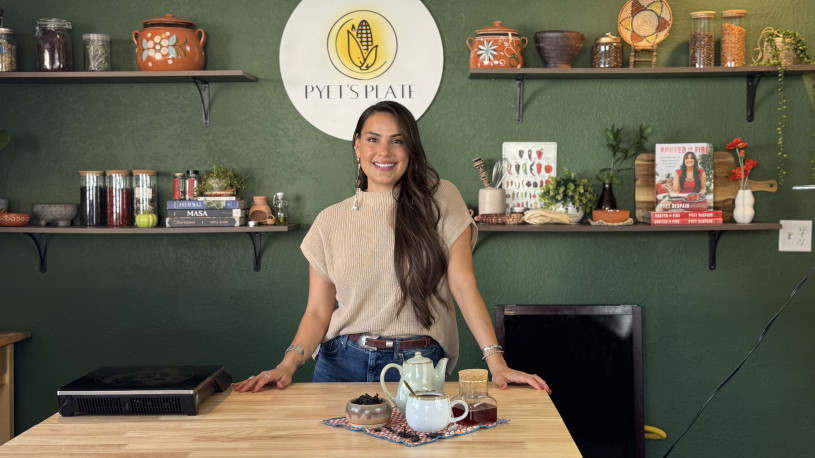
I moved here about nine years ago from Kansas City. I was just two years into operating Pyet’s Plate, focusing on nutrition, but I had a hard time gaining traction in the Midwest. Kansas felt isolated regarding forward-thinking foodways. L.A. felt like a calling because of the plethora of variety and the opportunity for private chefs to implement new lifestyles. I packed what would fit in my car and drove across the country with my cat.
I have a different concept and perspective of what home is now. It's not really a place, it's a feeling.
Living here has changed my perspective on "home". I’ve moved so much in my life—between Oklahoma and Kansas—that I never tied a place to being home. Home is a feeling now. It resonates with the people I am with. Whether I am with my family or building a life here with my husband, Eric Hernandez, that is where my heart is.

Chef Pyet
While her formal classes focused on classical French techniques and mother sauces, the experience opened her eyes to entrepreneurship, teaching her that she could build a career as a private chef rather than working in a traditional restaurant kitchen.

Chef Pyet
Chef Pyet's early passion for nutrition and health-conscious cooking originally inspired her to study wellness coaching and meal preparation, forming the initial foundation of her career.

Chef Pyet
For Chef Pyet, cooking is a way of reconnecting with heritage. The herbs and traditional ingredients in her kitchen carry stories of the foods that have sustained Indigenous communities, while finding new life in the dishes she creates today.

Chef Pyet
Chef Pyet preparing a fresh dish that bridges her Great Lakes tribal roots with her Mexican lineage. Choosing authentic self-expression over burnout, she creates recipes that highlight original American foodways long overlooked in mainstream culinary spaces.
I grew up fantasizing about tea time. My mom was adopted, and during the year my mom and my grandmother reconnected—while my mom was pregnant with me—they went to a tea parlor in Pawhuska, Oklahoma. They had these ridiculously big hats and were having tea, and that was a bonding moment for my mom and my grandmother. When we think about beverages in my family, it's always a time where the women in our family sit down, talk, laugh, and giggle.
Tea is very sacred in a way that you're honoring the plants and the animals.
On my Mexican side, the lineage is complicated. My DNA results trace to Juarez, Mexico, but I grew up culturally Mexican through my grandmother. Though she was technically Spanish-French, she spoke fluent Spanish, cooked Mexican food, and was highly respected in that community. Her own "awakening" was a neighbor's gift of fresh flour tortillas with cesos and warm butter. I grew up gravitating toward the bright jars of agua fresca on the counters, specifically the magnetic color and hydrating flavor of jamaica (hibiscus).

Chef Pyet
Chef Pyet's mother, Delfina (right), and her beloved grandmother, Barbara, in their tea party hats at a parlor in Pawhuska, Oklahoma.

Chef Pyet
Chef Pyet was incredibly close to her late grandmother, Barbara. Culturally Mexican and fluent in Spanish, Chef Pyet's grandmother passed down a profound love for vibrant Mexican flavors and warm community hospitality.

Chef Pyet
Chef Pyet, pictured here with her mother and siblings, grew up in Oklahoma and Kansas. Long before launching Pyet’s Plate, her multicultural upbringing began shaping her deep appreciation for community, family gatherings, and ancestral foodways.
Culinary school taught me I could be a private chef and an entrepreneur rather than working in a restaurant. But a few years ago, I hit a real-life burnout. I was cooking for up to 17 clients a week, making Paleo or Keto meals that I felt no connection to. I was crying in 9 AM traffic on a Monday morning in downtown L.A., realizing I was tapped out.
I asked myself: "If money weren't an issue, what would I want to spend my life doing?" I realized I wanted to represent my true self. I saw other chefs celebrating their countries, but Indigenous foods weren't being highlighted at the table. I started researching what my ancestors ate before colonization. It brought up joy, anger, and a need to understand why these conversations were lost. It turned my work into food advocacy and sovereignty.
The more research I did, the more I became overwhelmed with warmness, anger, and joy. It turned my work into food advocacy and sovereignty.

Chef Pyet
Moving away from uninspiring Paleo and Keto diets, Chef Pyet pivoted her practice toward ancestral ingredients to elevate pre-colonial flavors and a deeper understanding of her own history.

Chef Pyet
After hitting a personal burnout, her deep dive into pre-colonization Indigenous foodways transformed her culinary work from standard client meal prep into a mission for food sovereignty and cultural representation.

Chef Pyet
Honoring her Prairie Band Potawatomi Nation and Mexican-American heritage through her cuisine, Chef Pyet centers ancestral ingredients turning her business, Pyet's Plate, into an active platform for food advocacy.

Chef Pyet
A hearty bowl of rabbit hominy stew paired with golden fry bread—a dish that perfectly showcases Chef Pyet’s signature concept of "Indigenous Fusion".

Chef Pyet
A pantry can hold more than ingredients. It can hold connections to family and community, and to the generations who came before. These traditional ingredients are part of how Pyet's Plate brings those stories forward.
I am a fusion, so my cuisine is a fusion. I am a member of the Prairie Band Potawatomi Nation. My people were originally from Lake Michigan but were relocated in the 1830s, walking the "Trail of Death" to Kansas.
The border created a false separation between "Mexican" and "Indigenous," but the truth is that many Mexican people are Indigenous, too. I call it Indigenous Fusion to introduce the concept in baby steps through familiar flavors. I use Mexican food as a "carrier" for the message, introducing deeper Indigenous history through the ingredients.
My cuisine is a fusion, because I am a fusion.
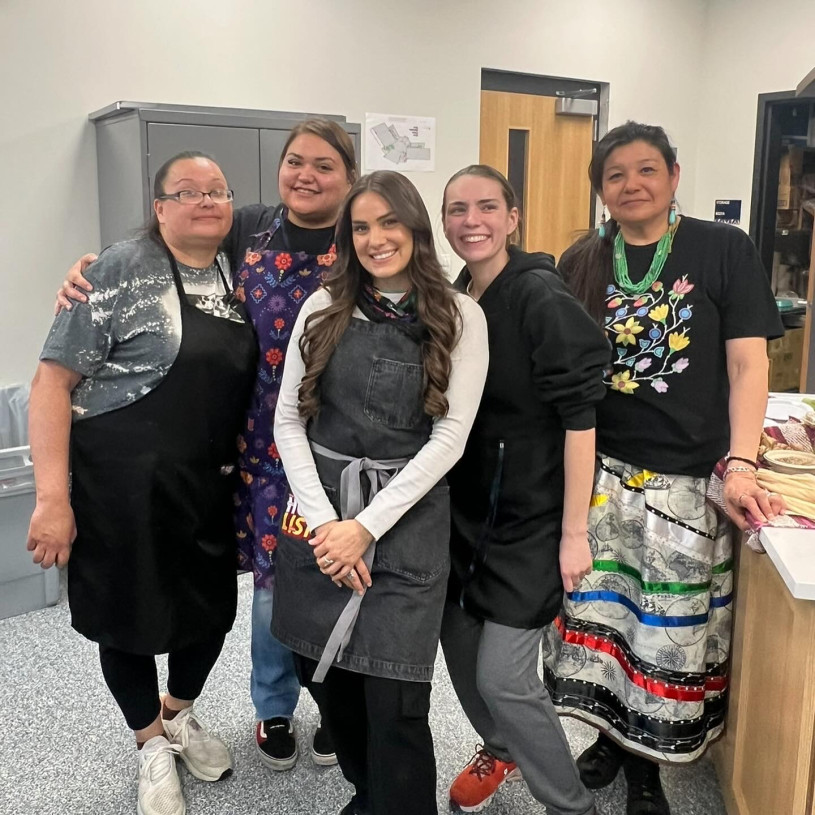
It is my Hibiscus and Prickly Pear tea, sweetened with maple syrup. Prickly pear and hibiscus thrive here in California and Mexico. The maple represents the Great Lakes region where my people are from; maple tapping is a sacred time of year for us. This drink is a nod to my current location and my ancestral home.
I’ve also been exploring mocktails because I stopped drinking alcohol at the beginning of the year. I want to create interesting drinks that aren't just a bunch of sugar, but instead use my own syrups and tinctures.

Natural History Museums of Los Angeles County
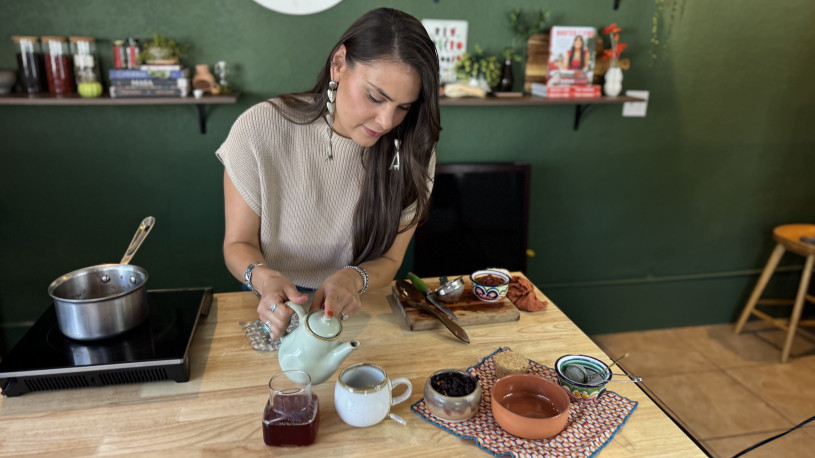
Chef Pyet's hibiscus and prickly pear tea, sweetened with maple syrup, is an expression of Indigenous Fusion: familiar flavors brought together to tell a deeper story about who she is, where she comes from, and the connections between cultures.

Natural History Museums of Los Angeles County
Prickly pear connects Chef Pyet’s cooking to the landscapes of the Southwest and Mexico. As the prickly pear simmers, its color and flavor become the foundation of the tea.

Natural History Museums of Los Angeles County
Rather than the typical sugar or sweeteners paired with herbal teas, maple syrup brings another part of Chef Pyet's story to the glass: the Great Lakes region, the ancestral homeland of the Prairie Band Potawatomi, where maple tapping is a sacred time of year.

Natural History Museums of Los Angeles County
After Chef Pyet combines the sweetened cactus syrup and fresh hibiscus tea, the final step is letting the ingredients meld together to create a bright and nourishing fusion of flavors.

Natural History Museums of Los Angeles County
Chef Pyet sees gathering over a beverage as a kind of ceremony—an opportunity to share energy, stories, laughter, and connection. Her tea carries that spirit from the kitchen to the table.

Natural History Museums of Los Angeles County
For Chef Pyet, gathering over a beverage creates space for stories, laughter, connection, and a sense of ceremony—making this tea a reflection of the relationships and traditions at the heart of her cooking.
I spend a lot of time with Indigenous youth, teaching them food sovereignty. I created "Indigenous Foodways Bingo" where I give them riddles about plants and animals. If they figure it out, I gift them something culturally relevant, like wild rice or blue corn.
For me, ceremony isn't just a formal event. Catching up over a matcha or a smoothie is ceremonial because we are sharing energy, stories, and prayer. Historically, Indigenous women had to sneak around to speak their language and share stories because it was outlawed. Today, coming together to share a beverage is therapeutic and healing.
Coming together to share a beverage, time, and laughter is therapeutic and healing.
To learn more about Indigenous fusion and food advocacy, follow Pyet’s journey at pyetsplate.com or through her book, Burned and Fire.
Do you know an L.A. beverage crafter who lovingly connects to your community? Join the conversation by tagging @NHMLA with #LACultureinaCup!

