Fly the Bird Migration Super Highway at Bear Divide Banding Station
Discover the spectacle and the science happening at Bear Divide Banding Station

Above Photo by Dave Mull
Published May 11, 2026
It’s dark out when the caravan departs from a 7-Eleven parking lot in the foothills of the San Gabriel Mountains for a half-hour drive up a winding road.
When we reach the dirt parking lot summit at 5:35 am, it’s still pretty dark out. But the early bird lover catches rush hour for the annual avian migration at the Bear Divide Banding Station.
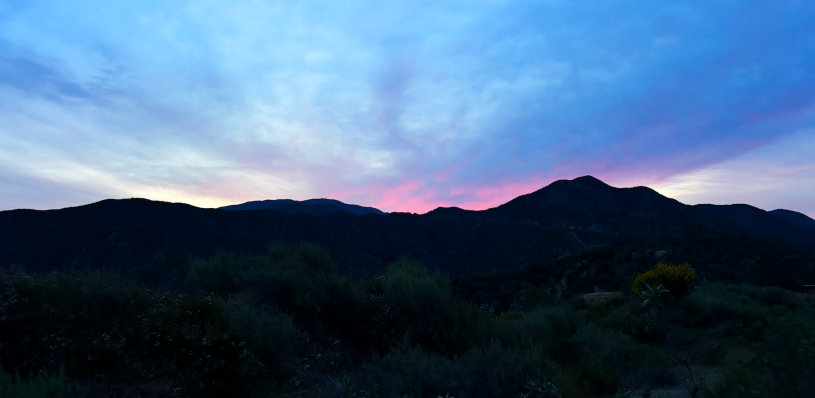
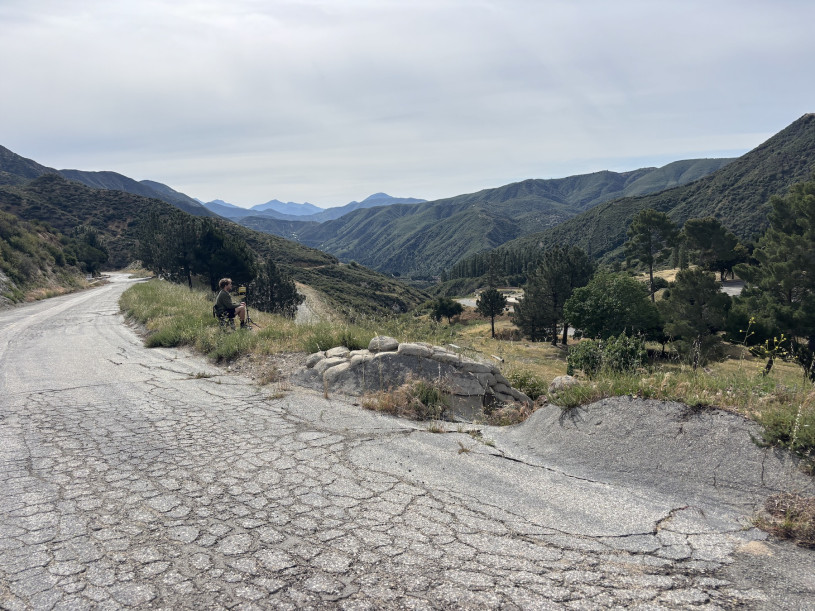
A little more than 30 miles north of Downtown L.A., Bear Divide is a migratory bird corridor that sits at a low elevation passageway in the San Gabriel Mountains, funneling large concentrations of migrating birds every spring. It's a unique opportunity for researchers to study migratory landbirds along their spring migration routes in the Pacific Flyway over the Western United States. The same bird species pass through each year from mid-March to mid-May, and researchers track the ebb and flow of their diversity and abundance by banding and counting migrating birds.
The first documentation of the migration movement at Bear Divide was recorded in 2016 by a local biologist, and later was documented more thoroughly a couple of years later, establishing the current migration counts in the area. In 2021, Tania Romero and Lauren Hill founded the Bear Divide Banding Station to build a long-term monitoring program cataloging the diversity and details of thousands of birds migrating along the Pacific Flyway through bird banding, an important field technique used to study birds. The bird superhighway stretches all the way from Patagonia at the tip of South America to Alaska.
“The Bear Divide Banding Station offers a unique scientific research opportunity to study migratory landbirds through bird banding, a field technique that requires temporary capture of birds and deployment of metal bands," says Tania Romero. "Through bird banding, we are able to collect refined details that are often not documented visually, such as age and sex demographics, general health of birds, and how they are using the site. Through bird banding, we are able to better understand how to better protect birds for future generations and provide insight on their conservation needs.”
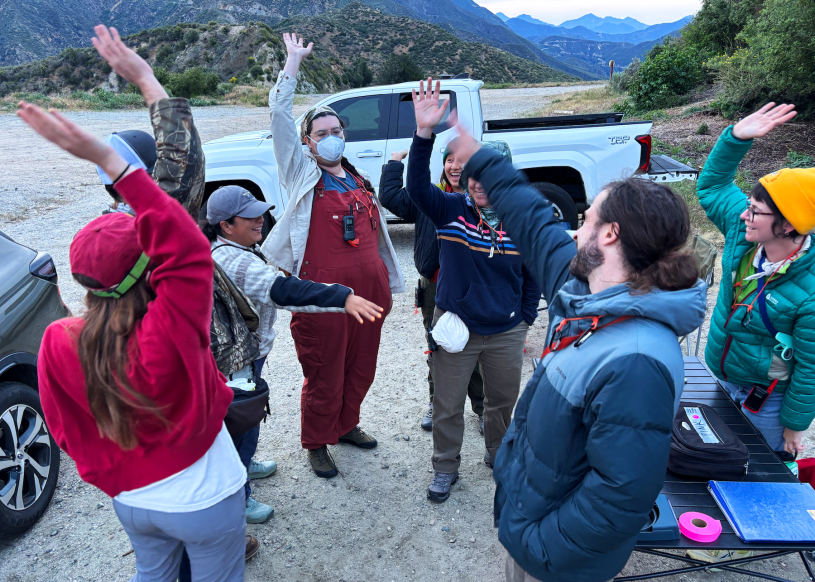
During the spring migration season, the Banding Station is helmed by folks like Maeve Secor, PhD Candidate at USC and Graduate Student-in-Residence in NHM’s Ornithology Department. Her PhD research focuses on the genetics behind bird coloration. This is Secor’s fourth year as a volunteer bird bander at Bear Divide, where she has trained in skills like bird handling, aging, and identifying a bird’s sex — all relevant to her dissertation work.
“In a given morning, they've observed 10,000 birds passing through,“ Secor tells me. “It's just a really special thing to get to be a part of. I fell in love with it the first time I visited.”
Busted Feathers
Beanied and layered, eight volunteers emerge gingerly from their vehicles to hustle poles out and set up mistnets, thin 12-meter nets anchored between poles meant to catch avian commuters. The birds are then briefly detained for processing, where researchers attach a tiny metal band with a unique number on the bird’s right leg and record the species, age, gender, and other physiological characteristics to better understand who’s flying through on their way to breeding grounds in the far north, and in what condition they are passing through. Measurements such as mass and fat scores can help us determine if the site is a gas station on their journey—a stop to rest and refuel. Wear and tear on bird feathers can tell researchers if birds are malnourished or preparing for their migration journey.
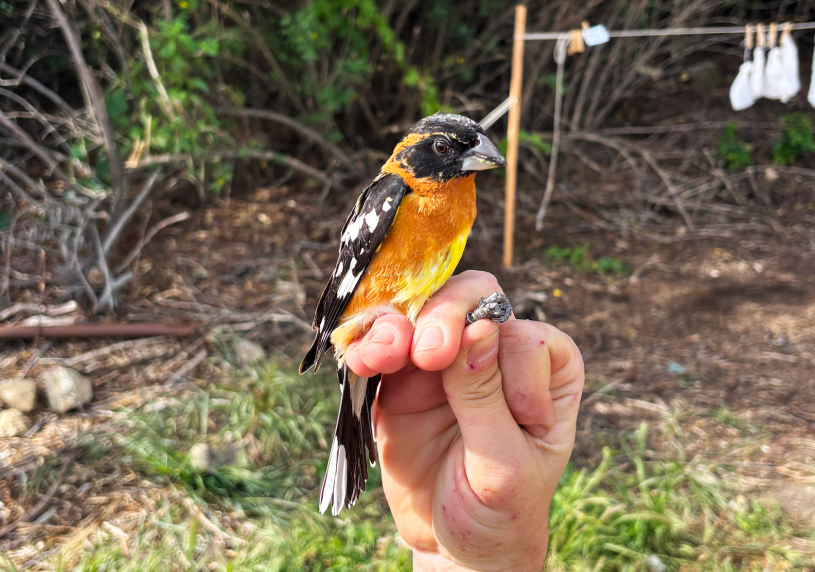
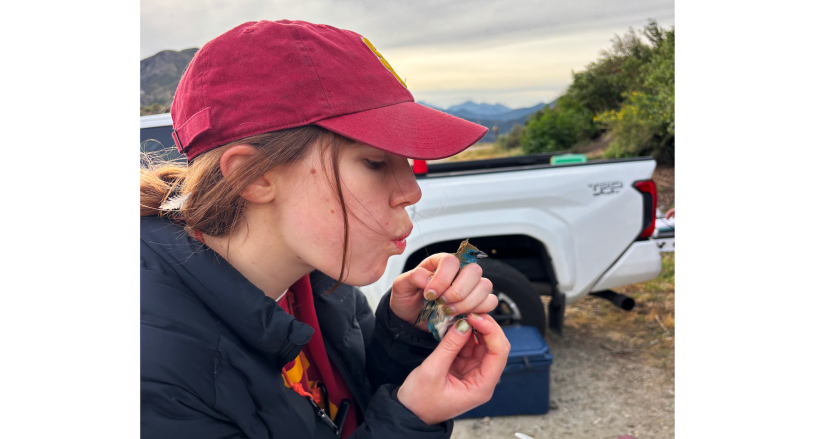
Described in its constituent parts, the banding work sounds reasonable, almost relaxing: a bird is briefly held and examined by one volunteer. Another volunteer notes the bird's particular details. Sometimes a bander will blow lightly on a bird's head to get a better view of its crown or fat scores in the chest.
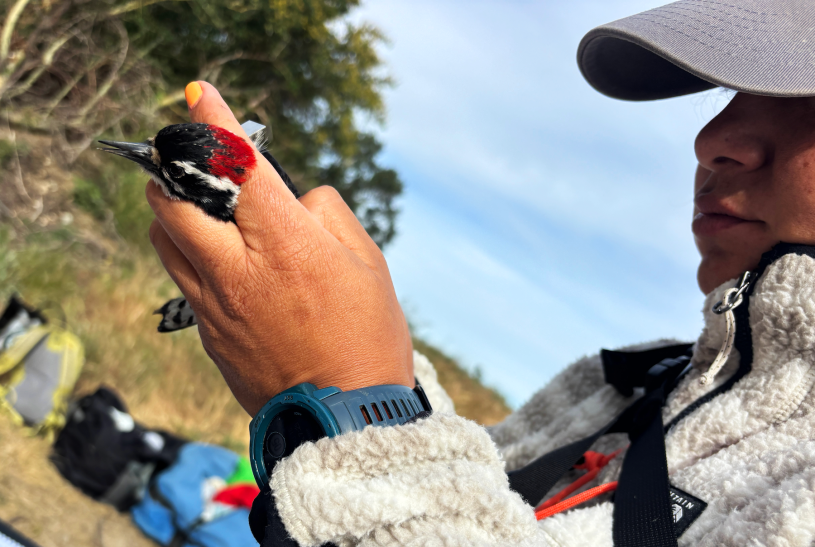
In reality, the banding station at Bear Divide is a feat of scientific data gathering and skill, dipping a metaphorical spoon into the sea of birds washing through the region to get a taste of what is happening. It’s a training ground for a rarified craft where bird researchers learn how to band the objects of their study—itself a phenomenal act of speed, grace, and encyclopedic knowledge that is only mastered through intense practice and repetition. Every bird is banded, measured, recorded, and released in less than a minute, and always with finesse.
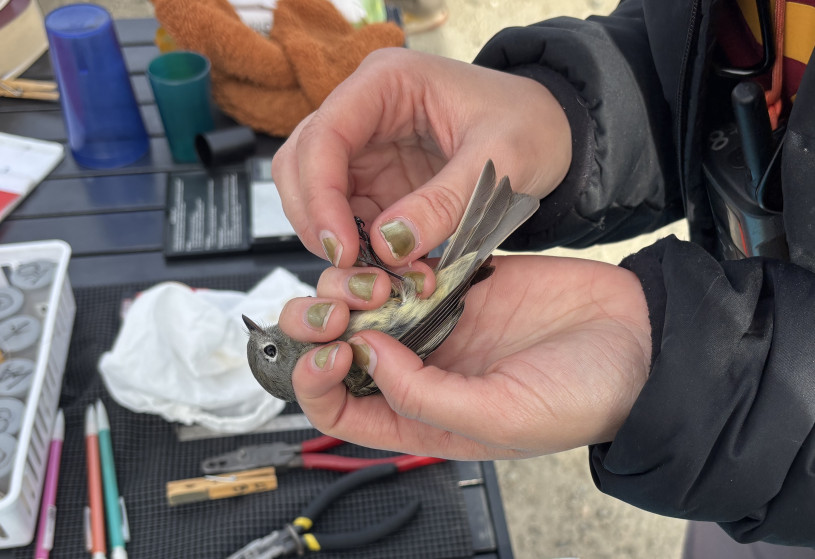
This closer look is the only way to tell how old the birds passing through are, crucial information for understanding how populations are faring. "When we're aging the birds, we look for what's called a molt limit—when there are at least two generations of feathers in the wing," says Secor. "Birds grow their first feathers really fast in the nest, so they look pretty busted. Before their first fall, they go through a preformative molt that replaces some of those feathers, and we can still see that contrast when they come through here in spring."
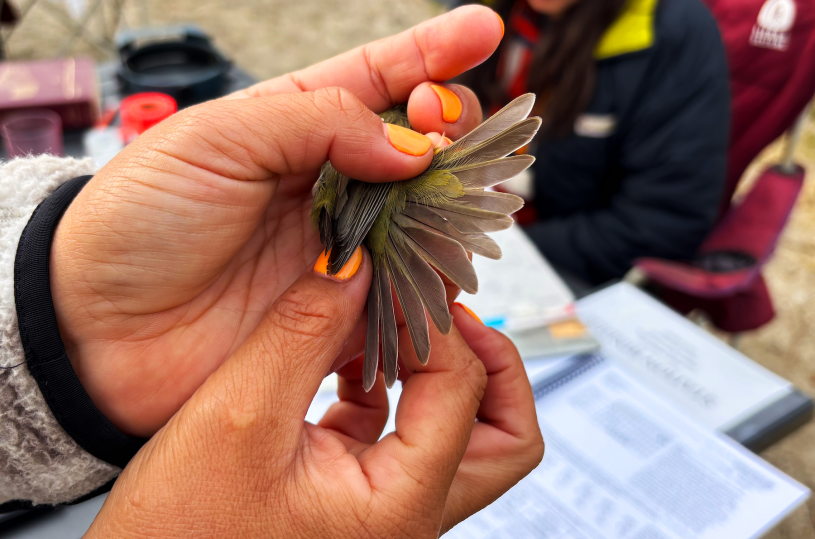
Kristen’s Got a Bouquet of Warblers
After the nets are set for the morning, the volunteers rotate back and forth in 30-minute waves, returning laden with cotton bags containing birds. Loyola Marymount University’s Dr. Kristen Covino returns from a net run, announcing she has a bouquet of warblers, highlighting the capture of 5 different warbler species.
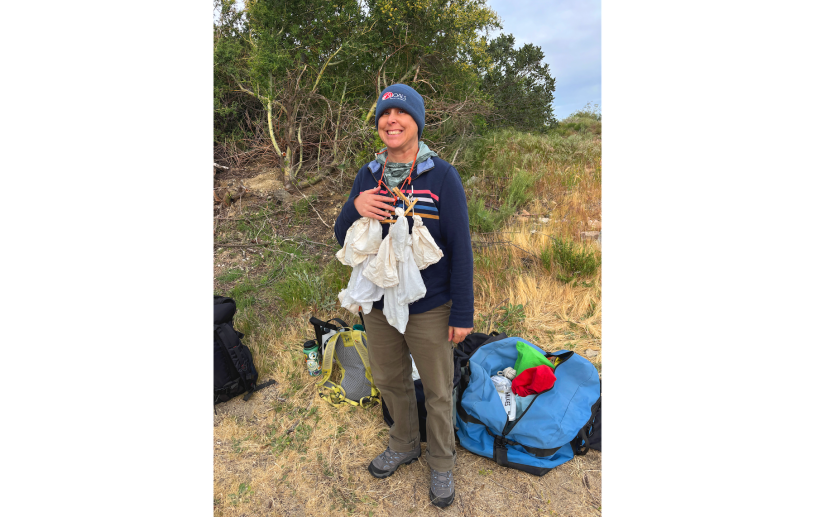
The Banding Station is a hub for researchers as much as it is for birds. Covino is hoping to draw blood from three specific bird species (Swainson's thrush, Audubon's warbler, white-crowned sparrows). She’s just one of the dozen or so partners from research organizations collaborating with the Banding Station on any given day.
“There are a lot of feathers being collected for the Bird Genoscape Project that works with tons of different banding stations. We take feathers from particular species, ship them to the Ruegg Lab at Colorado State University at the end of every season, and they extract DNA to build genoscapes identifying a species genetic variation across their breeding range.”
The overlapping projects result in some plucked feathers and occasional calls of, “We’ve got poop!” Bags befouled with precious bird droppings are passed along for collection as part of station co-lead Tania Romero’s warbler fecal sample project. For one of her PhD dissertation chapters at UCLA, she will determine the dietary composition and overlap of at least five warbler species passing through this area every spring.
The bags are lined up, opened, and recorded as quickly as possible to minimize stress before sending the birds back on their way after a minor interruption in their epic journey.
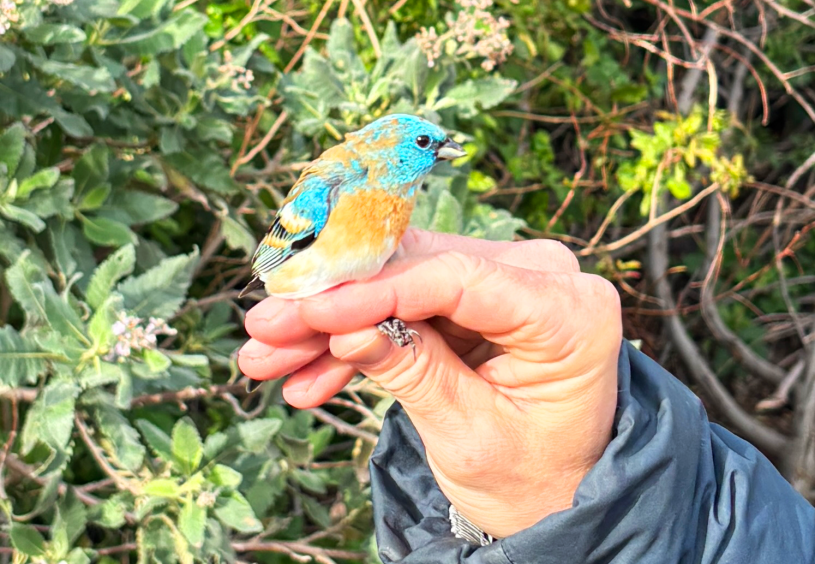
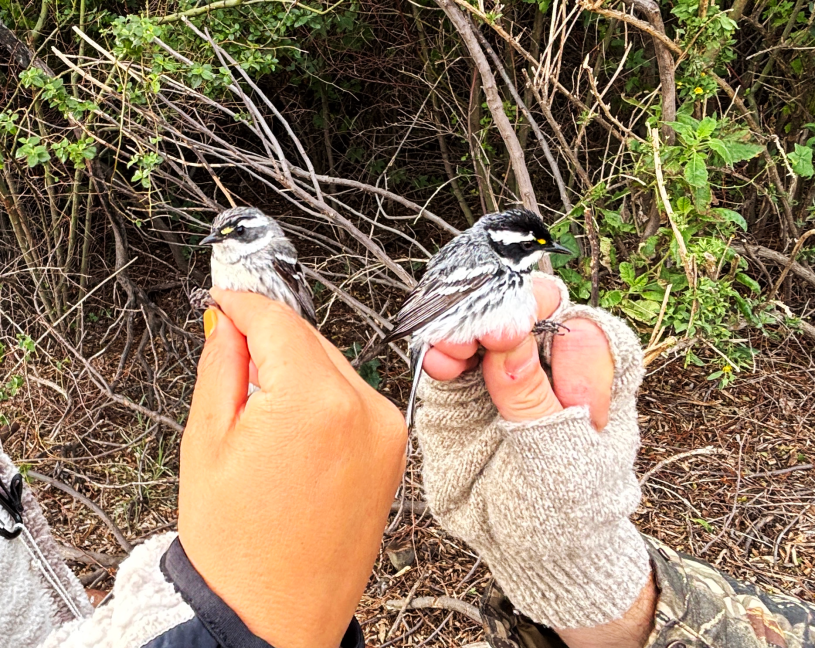
As things start to speed up, the banding station feels like prep at a high-end restaurant during peak hours, with a steady stream of action punctuated by its own brand of slang: LAZB, EMPIDS, no BP, no CP, and on and on. Every species has its own four-letter identifier or alpha code, a common language in the bird world; LAZB stands for lazuli bunting.
“Everybody has their own species that they think are really cool, but because I study colors that are produced with structure, I’m always excited to see things like lazuli buntings,” Secor says.
Looking at the individual birds collected, it’s easy to lose sight of the sheer magnitude of birds passing through Bear Divide. An hour after the banding team, the point counter, Jodhan Fine, arrived, set up with a chair and iPad facing the opposite side of the dirt lot, where the low point that makes Bear Divide so special is more apparent. He’s counted nearly a thousand individuals. It’s not even 10 o’clock. Normally, things start to quiet down, but today they don’t show any sign of stopping. As we’re speaking, several dozen LAZBs flock by.
By the end of our time at the banding station, Tania tallies how many birds they’ve banded, and we each take a guess. We all undershoot: the total is 93 individuals. Each of these newly banded birds is on the next leg of their journey, which might include another banding station further north, or maybe somewhere south when they migrate back to their wintering grounds.
“The Bear Divide Banding Station has four main pillars: research, training, outreach, and collaborations. As someone that grew up in Los Angeles with the common narrative that nature was not around me, it was important to me to be able to share what I do to my city and combat that narrative,” says Romero. “We live in one of the largest cities in the nation, yet hundreds of birds interact with this space. One of my favorite things about this site is being able to share this work with the public and showcase the tiny details on our feathered friends. In the future, we hope to establish a non-profit as a bird observatory to continue this work and continue sparking environmental stewards by building connections to our local wildlife and ways we can help birds on their migration journey.”
“Public engagement has increasingly become a really big part of Bear Divide,” says Secor. “When it first started, nobody really knew that we were there. We love to engage with the public, and usually there is someone on busy days whose main job is running interpretation with the public and talking with them, and teaching them about the birds we are banding.”
You don’t have to wake up before dawn to see the majesty of the Pacific Flyway at Bear Divide. Romero and her colleagues will happily show you when rush hour calms down. Learn more about Bear Divide and how you can visit here.

