10-million-year-long Mammal Layover in Mexico Primed the Pump for the Great American Biotic Interchange Between North and South America
Published in the journal Science, a new study by NHM researchers shows that Mexico acted as a biodiversity "holding pen" for 10 million years ahead of the Great American Biotic Interchange that opened the floodgates between North and South America 2.8 million years ago.

Key Takeaways
- The Great American Biotic Interchange (GABI) marks the free flow of animals between North and South America 2.8 million years ago, when the Isthmus of Panama connected the two continents
- A new study in Science finds Mexico functioned as a "holding pen," for North American mammals to gather, diversify, and for about10 million years before crossing into South America when the Panamanian land bridge formed
- Researchers behind the paper created a new database of fossils from Mexico to better understand how life in the region diversified over the holding pen period, priming them for success in the southern continent
- The finding adds new information to the story of how life traveled between and ultimately shaped life on both continents
Ever wonder how some of the Ice Age titans found at La Brea Tar Pits and studied at the Oschin Center for Global Ice Age Research ended up in the Los Angeles area of the Pleistocene? Or how ancient elephants ended up in South America? The short answer is the Great American Biotic Interchange (the even shorter answer is the acronym GABI).
The longer answer: North and South America were isolated from each other for 60 million years, separated by the Central American Seaway, before shifting tectonic plates pushed former islands further above the surface to form the Isthmus of Panama around 2.8 million years ago. The newly formed land bridge, spanning modern-day Costa Rica and Panama, created an ancient pan-American superhighway for animals like large mammals to spread northward (or southward) into new environments. This is GABI.
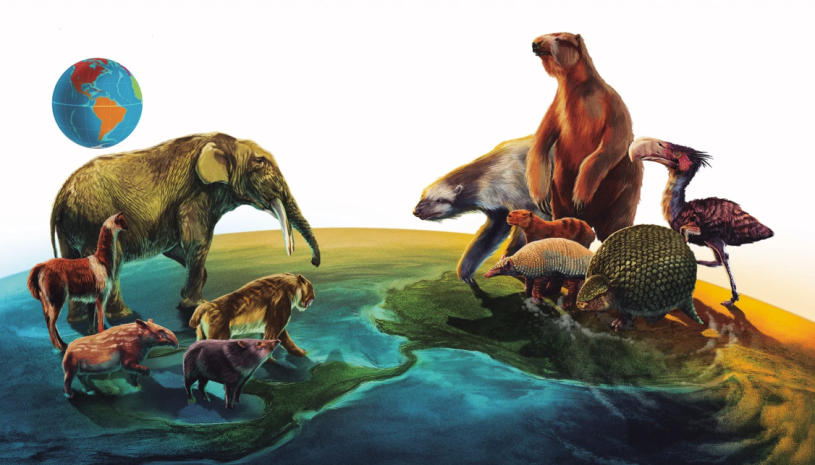
A new paper in the journal Science argues that the journey between continents was more complicated. The international team behind the study collected more than a decade’s worth of fossils in Mexico, building on the work of co-author Oscar Carranza–Castañeda to create a massive database of fossils from the region covering the last 12 million years. They found a remarkable similarity between the fossils in this new collection and those known from farther north on the continent, suggesting that North American mammals were seeking southern ranges millions of years earlier than previously estimated. The edge of the continent became a holding pen from 10 to 7 million years ago, where mostly large mammals waited for opportunities to head south.
“Our study demonstrates for the first time that not only was there a set of significant pre-GABI phases that are different from the traditional Great American Biotic Interchange events 3 million years ago, but that this ramp up is much older than people thought or imagined,” says lead author Jack Tseng, a UC Berkeley Professor of Integrative Biology and Research Associate at the Natural History Museum of Los Angeles County (NHM). “The ramp-up began at the latest about 10 million years ago.”
These mammals continued to diversify in the warmer southern climate during what Dr. Tseng calls the holding-pen period. Even without a land crossing, ancient raccoons and small rodents had reached South America either by island-hopping or hitching a ride on plant material. This time of adaptation might have better prepared them for expansion ahead of the Panamanian isthmus rising from the waves, empowering mammals of all sizes to move between the two continents 2.8 million years ago, when GABI began.
Island Hopping
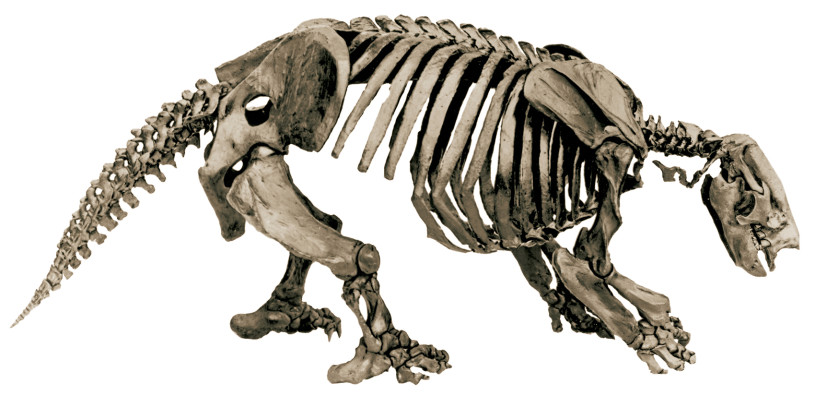
While most large terrestrial animals had to wait for the land bridge, some made it to North America ahead of the land bridge’s emergence. While smaller mammals head south before the continents connect, ground sloths were able to make it into North America millions of years earlier, presumably by traveling between islands.
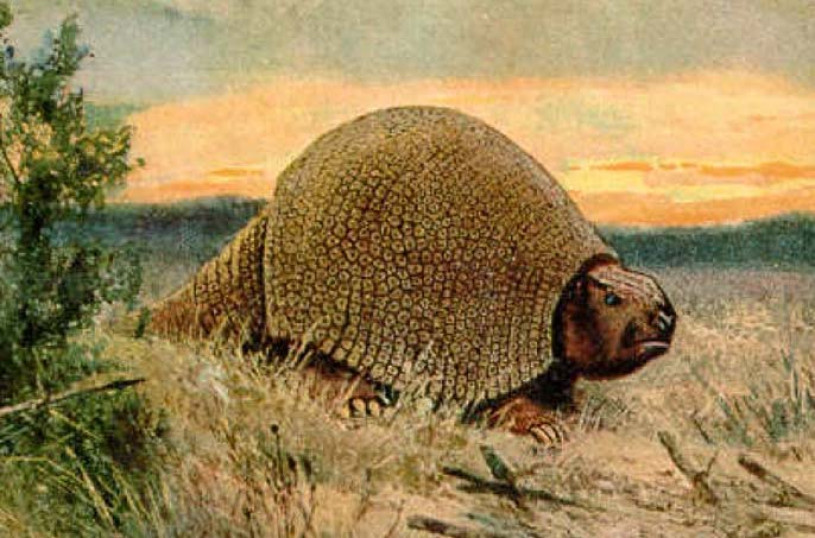
Even less likely than ground sloths (and to be fair, aquasloths were already a thing), glyptodonts, mammalian tanks, made the journey. Titanis, the flightless terror bird, also made it northward ahead of the land bridge. Some South American rodents also made the voyage, but precisely how these animals, especially the larger ones, traversed the Central American Seaway is still uncertain.
Off Ramps on the Prehistoric Pan-American Mammal Highway
“The Great American Biotic Interchange (GABI) is arguably the most significant geologic event in the late Cenozoic that profoundly altered mammal communities in both continents, but especially in South America, where its native mammals, such as marsupials and ancient ungulates, were replaced by many North American species,” says co-author Dr. Xiaoming Wang, Curator of Vertebrate Paleontology at NHM.
GABI shaped the landscape of life on both continents. Separated for 60 million years, almost since the end of the Age of Dinosaurs, life on the two continents had evolved on parallel tracks. Where marsupials had gone extinct up north, they had thrived and diversified down south. Saber-toothed marsupial thylacosmilids stalked xenarthans—the mammal group that includes anteaters, armadillos, and sloths.
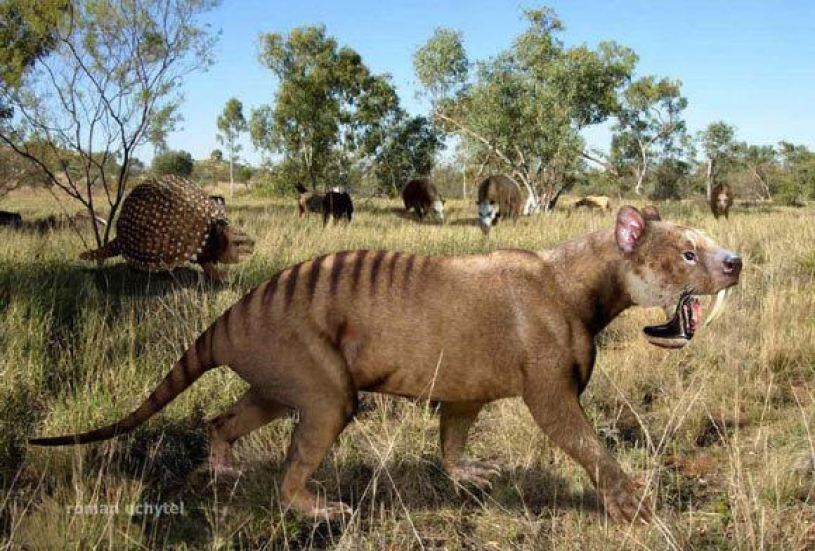
Big cats and dogs stalked North America, and prey was plentiful: tapirs, elephants, camels, horses, and other large herbivores roamed the land. Once the isthmus formed, mammals big and small crossed freely between the continents. Ultimately, big cats and packs of canids, licking their chops at new hunting grounds, invaded South America, and the southern continent’s native predators couldn’t keep up. Their teeth and adaptations for running proved too powerful, Dr. Wang tells me. Dogs, cats, and their relatives would become the top predators on both continents until the arrival of humans. Some groups we think of as South American, such as the camelids that would evolve into llamas and alpacas, originated in North America.
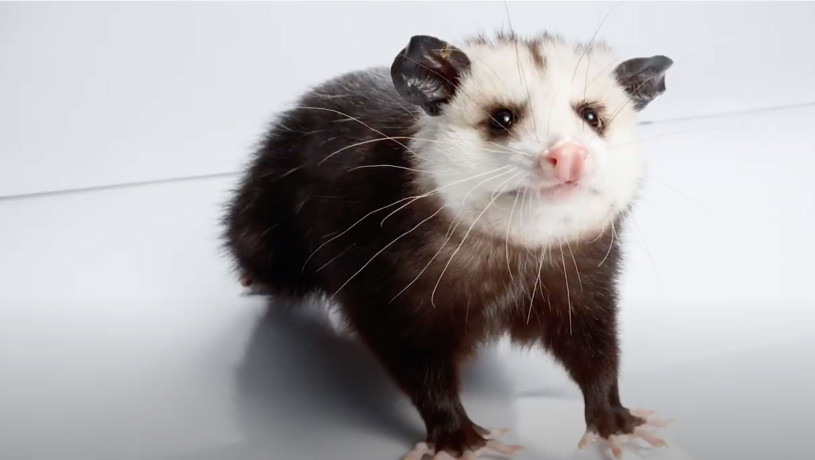
However, the most successful North American mammals were the rodents, specifically the group cricetids, which includes hamsters and voles. More than 450 species of these rodents are found throughout South America today, making them by far the most diverse group of mammals on the continent. In contrast, only one of the once diverse group of marsupials continues to reside in North America. Likely thanks to its prodigious breeding strategy, the North American opossum (Didelphis virginiana) is the only marsupial success story in North America. It’s possible that other marsupials, with their defenseless pouch-dependent young, couldn’t keep up with their North American counterparts.
Many South American species went extinct as their competitors from North America pushed them out, creating the ecosystems humans found tens of thousands of years ago. Across both continents, even previously successful groups would succumb to extinction at the end of the last ice age, the period captured at La Brea Tar Pits. At that site, we know that human-caused fires and climate change drove a mass extinction of megafauna. Similar mass extinction events happened in South America and globally, but are much less well understood. Exploring tar pits in South America, such as Talara in Peru, can help researchers understand what happened to the megafauna of the south. By painting a more complex picture of GABI, the new study raises tantalizing questions.
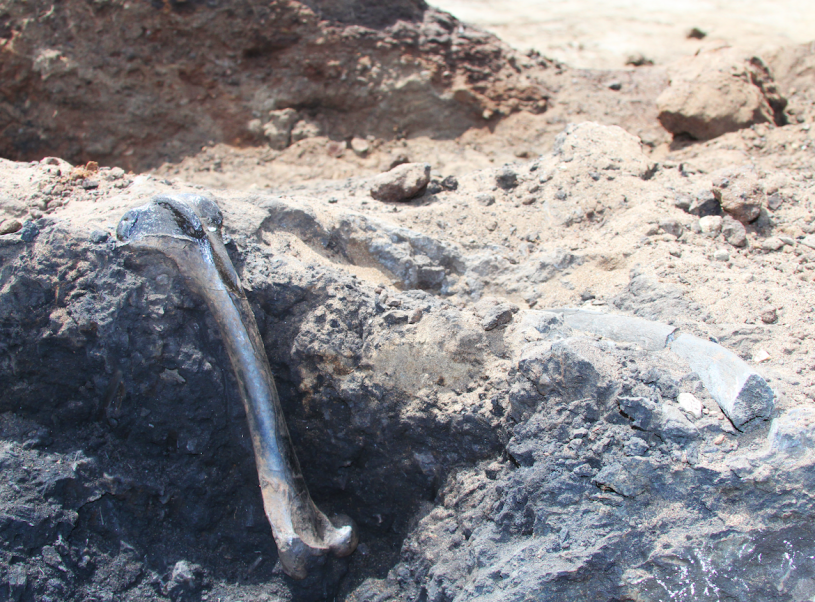
“Our findings suggest that as our fossil records improve, particularly related to finer resolution of the age relationships and their geographic locations, we are able to see nuances previously missed. The process of how GABI animals expanded their ranges as they arrived at a new continent that offers exciting opportunities,” says Dr. Wang.
What other factors played a role in the extinction of South American megafauna during GABI? Why was the exchange so lopsided, and can it inform our understanding of today’s global biodiversity crisis? How did those island hoppers make it across the Central American Seaway (especially the armored glyptodonts)? A better understanding of GABI lies within the fossil record of South America.
“Relative to North America, South American fossil records are less abundant,” says Wang. “Continental configuration and environmental differences are obviously one factor, but perhaps a lack of exploration is another important factor,” says Dr. Wang. “Regardless of the reasons, great potential exists for collaboration with our South American colleagues. Exciting fossils beckon for future expeditions.”
