Black Bears in Your Los Angeles Backyard
We asked our Curator of Mammalogy and Curator of Community Science what to do about big, hairy nosy neighbors

Published September 17, 2026
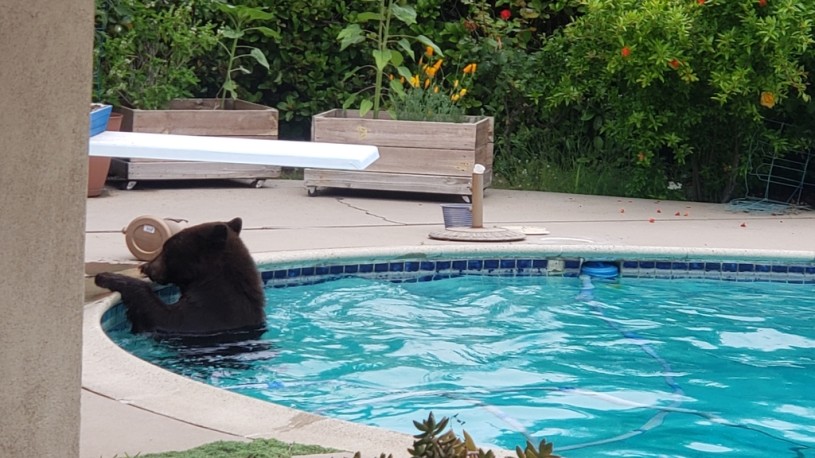
A recent report in the New York Times made a splash with Angelenos: more than ever before, black bears are finding their way into our pools, backyards, and human spaces generally. We checked in with our Curator of Terrestrial Mammals, Dr. Kayce Bell, and Curator of Community Science, Dr. Christine Wilkinson, for the facts about these bears, why and how they’re coming over, and what you can do to prevent it.
What’s with all these black bears?
KB: Just in general across time, black bear populations have been going up in Southern California ever since they arrived here. They don't have a predator or a major competitor except for humans. The only thing that's controlling their population is running out of resources or getting hit by cars.
So, having that growing population is going to lead to more human-wildlife interactions. The heat is probably what's driving them as far as bears showing up in swimming pools. It's hot. We would all like to cool off, right? The ease of getting food from people who don't have their trash and other things properly secured also increases that likelihood.
CW: In 1933, wildlife officials relocated nearly 30 black bears from Yosemite National Park, and most of the black bears in the San Gabriel Mountains and the San Bernardino Mountains descend from these relocated bears. Other SoCal black bears originate from a population from the southern Sierras that filled in the void left behind by the extirpation of grizzlies in the early 1900s.
Can you talk a little bit about misconceptions around black bears?
KB: Black bears are carnivorans. They are in the group taxonomically classified as carnivores because that's who they're related to—things that eat meat. But, they really are omnivorous generalists. They will eat meat, but they will also eat things like berries. They're pretty good omnivorous foragers, so they'll eat whatever they can come across. And that really varies by location.
In Colorado, for example, some bears feed on moths. During certain years when there's really high numbers of moths, bears there find them in a scree in rock piles in the mountains. They'll turn over all the rocks, the moths will come out, and bears will just consume massive amounts of moths.
In Alaska, you'll see these huge trenches that are dug out, and that's where a bear dug out a hibernating ground squirrel.
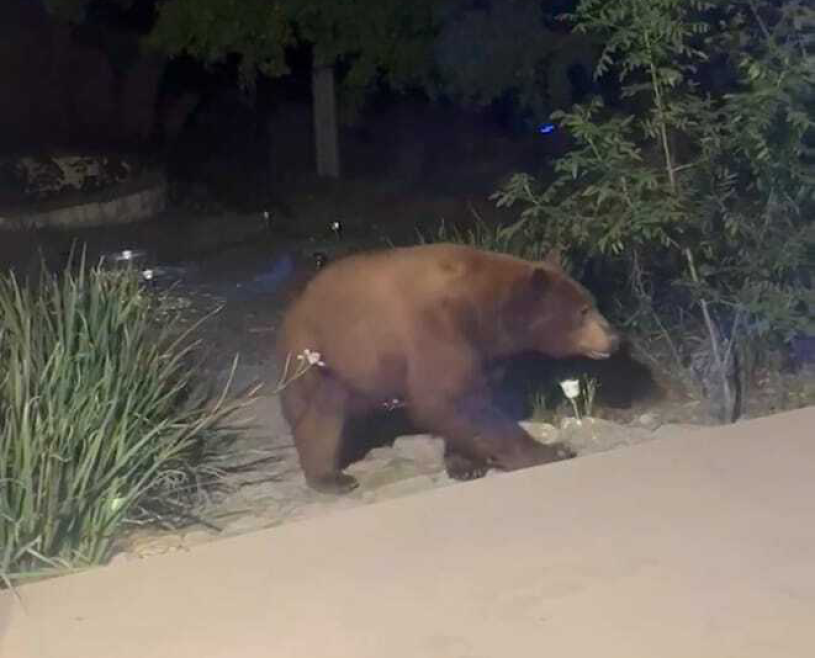
CW: As far as coexistence-related misconceptions, many people view bears as inherently aggressive or predatory, but black bears are actually naturally shy and reclusive. On average, they want to do their own thing and not interact with people. Also, when you see a black bear standing on their hind legs, it doesn’t automatically preclude an attack. They do this behavior to better assess a situation, and sometimes to more passively warn off a threat.
Should people be worried?
KB: No. There's really good guidelines out there on what you should do about bears, and I think if people follow those, they’ll be fine.
CW: Agree! People shouldn’t be worried—there are a lot of tools out there to help folks learn to safely share the landscape with black bears. If people learn from other communities that coexist with bears, and get started proactively with a “culture of coexistence”, they’ll be well prepared for living alongside black bears.
Here are those BearWise guidelines:
- From a safe distance, make loud noises, shout, or bang pots and pans together to scare away the bear.
- When the bear leaves, remove potential attractants such as garbage, bird seed, or pet food.
- Talk to your neighbors about removing attractants.
What are some things I can do to keep bears out of my yard?
KB: Keep your trash secure. Don't keep out foods that are going to attract the bears.
CW: Yes, as we coexistence scientists always say, “a fed bear is a dead bear”. Bears that have been habituated to people may eventually end up posing enough of a safety risk that they are removed by authorities. Securing attractants such as compost, trash, pet food, etc., will go a long way to preventing bears from becoming habituated to people and their resources. If you have a fruit tree in your yard, pick up fallen fruit routinely. All of this will also help keep other unwanted visitors out of your yard as well. You might also consider removing bird seed/feeders from your yard, especially during the black bear hyperphagia season, when their biological clocks are urging them to bulk up for the winter (even in southern California, where the winters are more mild). Hyperphagia is typically at its peak from late summer through the fall.
Your local municipality may be able to connect you with bear-resistant trash and compost bins if they aren’t already widely implemented in your jurisdiction. If bears are living near or in your neighborhood, you may also consider advocating for your town to widely implement bear-resistant bins before bears get too accustomed to the tasty human-provided treat that trash provides.
What should I do if one comes into my yard?
KB: If you see one, like, stay away and leave it alone. If you're outside and one approaches you, make yourself big and make a lot of noise. Definitely don’t try to feed it or approach it.
If you see a black bear in your yard, unless for some reason it's absolutely critical (like life or death in that moment) that you access that space, you should just leave it be because eventually it'll just go away. It'll leave on its own. Don't try to get it out of your backyard unless you really need to. You're much better off calling Animal Control.
CW: Kayce said it best—leave the bear alone if it’s not doing anything to you. If there is a recurring issue with a bear entering your yard, follow best practices for reducing attractants. Consult your local Animal Control or California Department of Fish and Wildlife field officers for advice if there is a recurring issue.
What should I do if I see a bear in the wild?
KB: In general they say if you're out hiking and you come across a black bear, try to scare it off, make a lot of noise and try to make yourself look big, do not approach.
CW: Usually, black bears like to keep to themselves. If you come across one from a distance while hiking, give it lots of space. If there is one on the trail but it is not approaching you, pick up small children and/or pets, keep eye contact, and back away slowly. If a black bear approaches you in the wild - like Kayce said, you should act big and loud—you can speak to or yell at the bear confidently and loudly, and make noise (without screaming) to ward the bear off. If there has been a lot of bear activity in your region, you may consider carrying bear spray on your hikes.
Have you had any experience with black bears in the field?
KB: When I was doing fieldwork in Alaska, I had two black bear encounters, maybe I had three, that were really just like what is supposed to happen. A bear started coming to investigate camp, and I got up, waved my arms, made a bunch of noise, and it did what the bear is supposed to do. It turned around and left,
Same thing in the Northwest Territories, there was actually a black bear swimming across a river coming towards me and we made a bunch of noise and it turned around and swam back the other way.
CW: All of my (very few) black bear encounters have been in urban and suburban areas while just living my regular life – never while hiking or doing fieldwork! In each of these circumstances, the bear was just doing its thing, and we let each other be.