New Study More Than Triples the Estimates of Insect Species From 6 Million to 20 Million
Ground-breaking study explodes the number of estimated insects, emphasizing the need for conservation and natural history collections

Published July 2, 2026
Key Takeaways
- Study more than triples the estimates of bug species across the planet from 6 million to 20 million
- Underscores the urgency of protecting wild spaces as reservoirs of undiscovered biodiversity
- Highlights the importance of studying insects through natural history collections like NHM's
“Insects play a lot of really important roles that we as humans appreciate, which could include things like decomposition, pollinating, and controlling harmful insects,” says Dr. Austin Baker, Senior Research Scientist at BioKEA and former post-doctoral fellow leading the California Insect Barcode Initiative at the Natural History Museum of Los Angeles County. “You have these intricate food webs that balance out the ecosystem so that no one thing is too destructive or harmful to the environment.”
That’s part of what makes a new paper co-authored by Baker and published in Proceedings of the National Academy of Sciences such a big deal. Baker and his colleagues more than triple the estimated number of insect species likely buzzing, burrowing, and crawling around the planet, from 6 million to as many as 20 million. And that’s the conservative estimate. Of that 20 million, scientists have described about a million species.
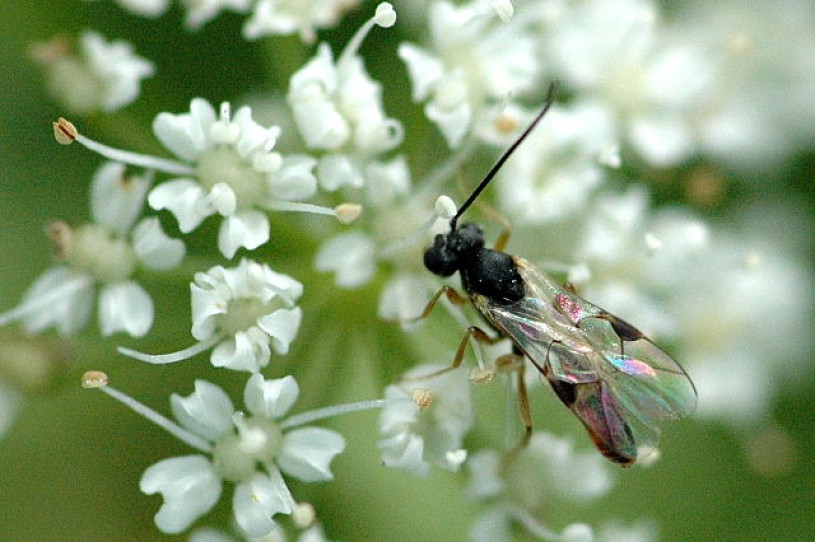
“Not only are they hyperdiverse, but they probably have the largest terrestrial biomass of animals,” adds Baker. “So they make up a huge portion of these higher food webs; things like birds, reptiles, and mammals, at some level in that food web, rely on insects. So, both their diversity and their abundance make them incredibly important to study, but they're still the biggest unknown in the animal world. Getting more data is truly essential for conservation efforts, both for insects and also for conserving all of the other things that insects interact with.” Insects are essentially the base that holds up the rest of the animal world. The new study suggests that we’ve only got a handle on a tiny part of that base.

The study used DNA barcoding, a technique where numeric codes are assigned to specific DNA sequences from field specimens to build a digital library. For this study, researchers built a library of well-collected parasitic wasps from Costa Rica. When the DNA barcodes had been sequenced, they discovered that only a small fraction of this group had actually been described. That gulf of undescribed species provided a template for reevaluating the estimate of insect diversity.
“While the findings from this study are rooted in intensive analysis of insects from Costa Rica, our research through the California Insect Barcoding Initiative shows the same pattern: even right here in our backyards, there are a tremendous number of insect species awaiting discovery and formal description by scientists,” says Dr. Megan Barkdull, NHM’s Assistant Curator of Entomology. “These kinds of large-scale, DNA-based approaches are perhaps the only way we will ever be able to scale this mountain of undescribed biodiversity.”
Check out the publication here, and stay tuned for more news on the California Insect Barcode Initiative.
