For Ancient and Modern Seagrass Ecosystems, Having a (Sea)Cow Is Super Important
A new species of extinct dugong from the Persian Gulf highlights sea cows as underwater lawn mowers protecting biodiversity

Published December 18, 2025
Sea grass is not the grass on your lawn, but it can run wild without maintenance. The right landscape (marine scape?) architect is crucial, and it turns out that for the Persian Gulf 21 million years ago, that key grass eater was the newly described extinct species of dugong: Salwasiren qatarensis.
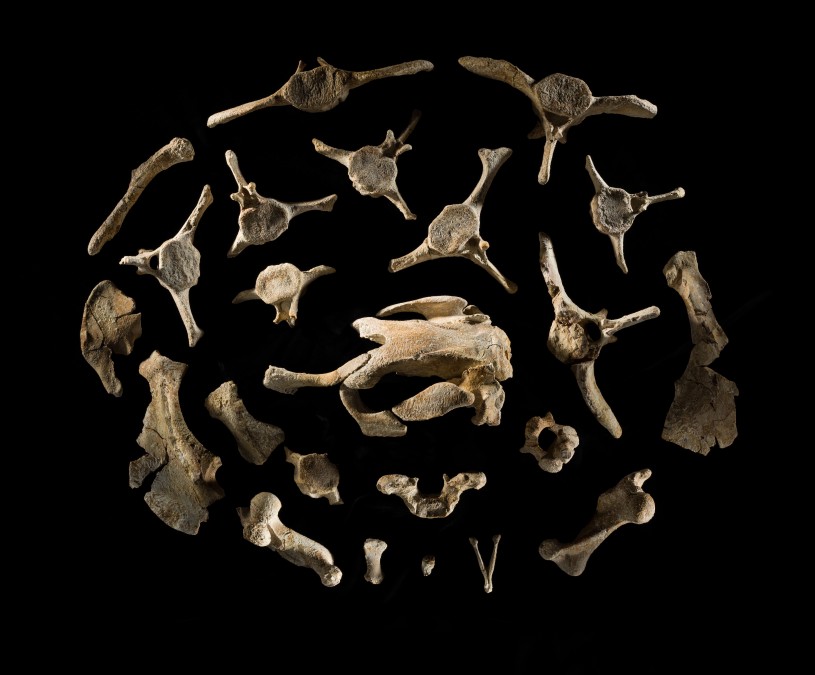
Published in the journal PeerJ, an international team of paleontologists, including NHM’s Curator of Marine Mammals, Dr. Jorge Velez-Juarbe, identified the new species unearthed from an ancient dugong graveyard in Qatar. Despite their mild-mannered vibe, the study highlights the heroic role dugongs play in making the rich tapestry of marine life possible.
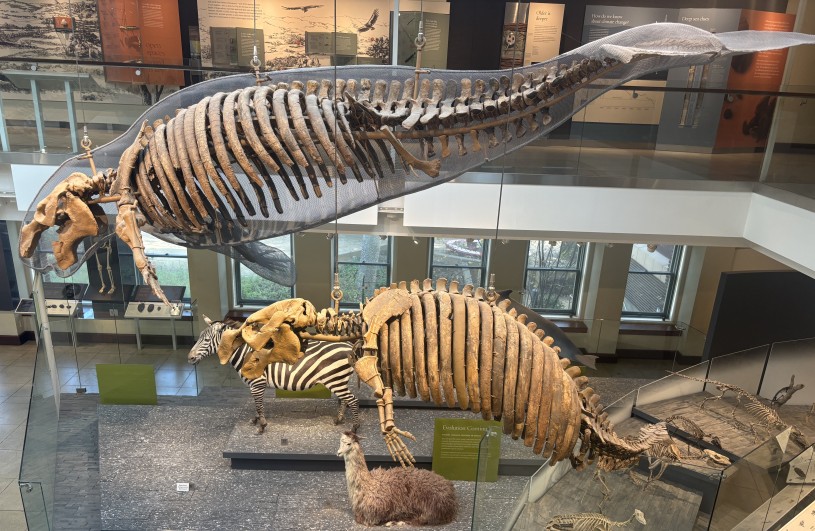
“We have new species of dungong where the fossil record is a little bit fuzzy,” says Velez-Juarbe, whose role in the study was mostly figuring out S. qatarensis place in the sea cow family tree, a complicated decision because sea cows’ body plans, regardless of the individual species, are pretty similar as their general body has not changed much over the last 30 million years. Their roundish bodies that taper off at either end, and dense, heavy bones are perfect for moving through the water easily and munching sea grass. “They were the top ecosystem engineers, because from a certain point of view, they had the tools. It probably had moderately-sized tusks, which would have helped it excavate large seagrasses.”
Holy Sea Cow!
Fossil whales, sharks, and fish were uncovered along with S. qatarensis. The find was expected, given the rich fossil records in the Mediterranean and Indian subcontinent from when the region was an open seaway until around 15 million years ago. Subsequent shifts in the landscape cut off the seaway; the Gomphotherium land bridge arose to connect Eurasia and Africa, shifting the ancient centers of marine biodiversity. What stands out about the dugong graveyard in Qatar is the abundance of fossils and biodiversity, which mirror the species richness of modern centers of marine biodiversity across the planet. Sea cows make that incredible biodiversity possible.
“We look at these ancient ecosystems and see how they've kind of repeated themselves over millions of years. It tells you that these are close to being optimal ecosystems that we should be taking care of for the future. It also highlights their fragility to changing environments and climate.” Dr. Jorge Velez-Juarbe
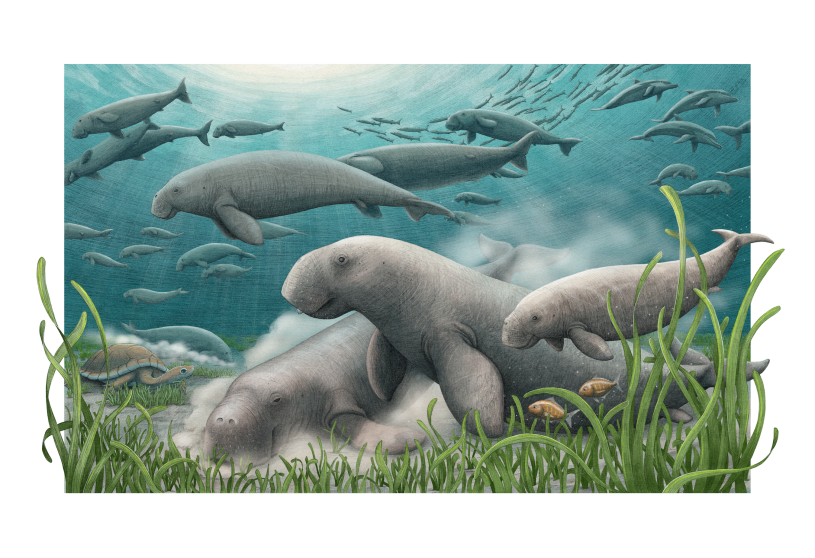
“They're kind of a keystone species for seagrass ecosystems,” says Velez-Juarbe, and those seagrass habitats are on par with rainforests and coral reefs in terms of productivity. The roots of seagrass help stabilize the sea floor, provide habitat for all kinds of small marine animals, and help control erosion. “Seagrass beds are usually composed of many different species, and every now and then, one species can grow out of control. Without checks and balances, they get sick, and then there's mass seagrass die-offs,” says Velez-Juarbe. “A lot of sea cows will eat the larger, dominant species of seagrasses. When they're gone, other, less dominant seagrasses sprout. It's like they're harvesting. So, they'll come back, and when they eat the seagrasses, they're not just nibbling on the leaves; they're uprooting everything.”
“So it’s just like we say in the paper’s title: sea cows are like the ecosystem engineers, keeping these seagrass beds in check,” Velez-Juarbez says.
Sea Cows: Climate Heroes
Protecting these underwater treasure troves of marine life—and their animal caretakers—will only become more vital as our oceans warm from human-caused climate change. “Seagrass ecosystems are very important for carbon dioxide storage. They protect the coast from hurricanes and storms.”
The dreams of mitigating climate change’s effects and maintaining marine species richness in their ecosystems rest on seagrass beds, and the seemingly docile sea cow’s ferocious appetite keeps the seagrass beds thriving. “We look at these ancient ecosystems and see how they've kind of repeated themselves over millions of years. It tells you that these are close to being optimal ecosystems that we should be taking care of for the future. It also highlights their fragility to changing environments and climate.”