2025 Excavated: A Look Back at Some of the Biggest NHM Discoveries
From prehistoric giant lizards and ancient raccoons to newly discovered spiders and heroic extinct dugongs, NHMLAC researchers had a busy year describing new species.
Meet some of the coolest creatures our researchers described this year, along with other inspiring discoveries.

Published December 22, 2025
Scientists at the Natural History Museum of Los Angeles County and La Brea Tar Pits have been busy in 2025. With a whopping 94 publications illuminating life from this planet’s distant past, complicated present, and uncertain future. Here are just some of the incredible findings from our researchers.
New (to Us) Species
Technically, when we say ‘new species’, we are talking about newly described species. After all, a dugong or tiny spider or giant lizard that roamed Earth before humans were even a thing isn’t new; it’s just new to us and science. And chances are, for living creatures, someone has seen them before, maybe just outside the world of Western science. That doesn’t make these discoveries any less cool or essential to understanding life on our planet. “We can't find solutions for the urgent problems facing today's biodiversity if we don't recognize the species that share and have shared the Earth with us. These discoveries also highlight the continuing and crucial role museum collections play in understanding and documenting biodiversity,” says Dr. Trina Roberts, Associate Vice President of Collections at NHM. “The Earth is large, the ocean is vast and deep, time is long, and most species are incredibly small... we are only beginning to understand what could still be out there.”
Sea Cows: Heroes of Marine Biodiversity
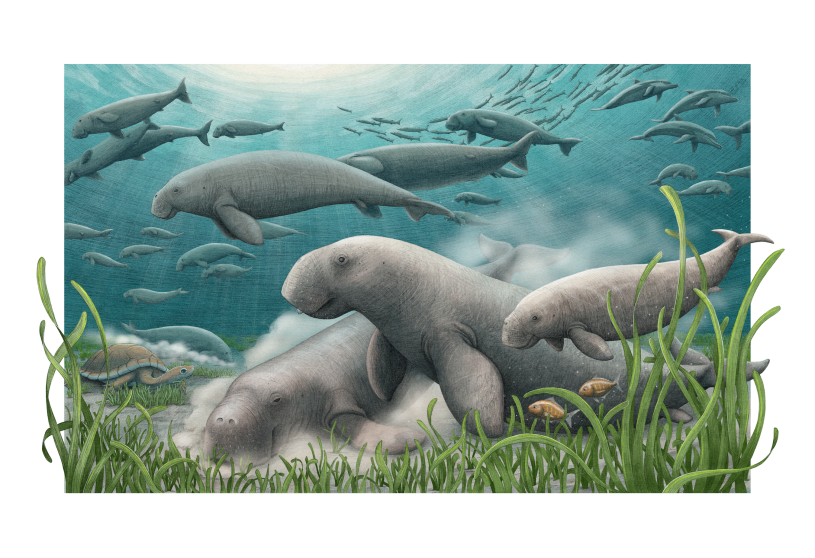
Sea grass is not the grass on your lawn, but it can run wild without maintenance. The right landscape (marine scape?) architect is crucial, and it turns out that for the Persian Gulf 21 million years ago, that key grass eater was the newly described extinct species of dugong: Salwasiren qatarensis. Published in the journal PeerJ, an international team of paleontologists, including NHM’s Curator of Marine Mammals, Dr. Jorge Velez-Juarbe, identified the new species unearthed from an ancient dugong graveyard in Qatar. Despite their mild-mannered vibe, the study highlights the heroic role dugongs play in making the rich tapestry of marine life possible.
A Monster Lizard in the Collections
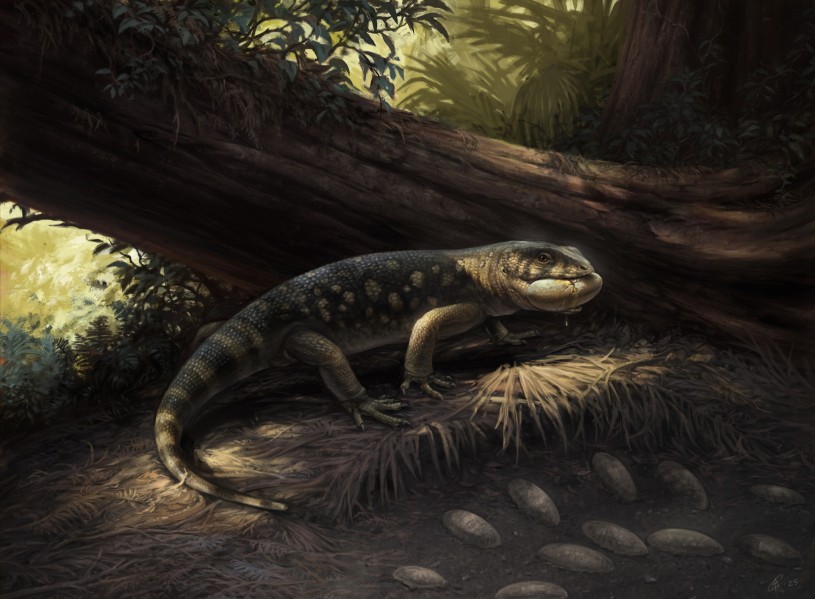
There are monsters—and treasures—lurking in the bowels of museum paleontology collections.
“I opened this jar of bones labeled ‘lizard’ at the Natural History Museum of Utah, and was like, oh wow, there's a fragmentary skeleton here,” says lead author Dr. Hank Woolley from NHM’s Dinosaur Institute. “We know very little about large-bodied lizards from the Kaiparowits Formation in Grand Staircase-Escalante National Monument in Utah, so I knew this was significant right away.”
The lizard Dr. Woolley identified belongs to the Monstersauria, a group of lizards characterized by their large size and distinctive features like pitted, polygonal armor attached to their skulls and sharp, spire-like teeth. Woolley dubbed the new species Bolg amondol —a name ripped from the lore of J.R.R. Tolkien's Lord of the Rings universe—and published the findings in the open-access journal Royal Society Open Science.
Two New Spider Species and a Whole New Genus
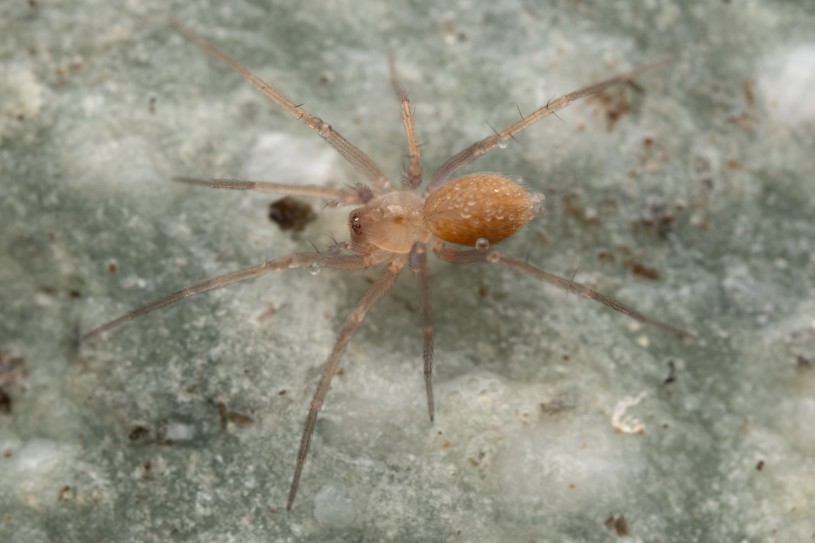
Can you tell one brown spider from another just by looking at them? It can be hard even for experts like arachnologist Dr. Rodrigo Monjaraz-Ruedas, one NHM's two new Entomology Curators, so he and his co-authors looked at a family of Cybaeidae spiders on the molecular level, and used genetic analysis to identify the new genus Siskiyu—and a new species in that genus—Siskiyu armilla—from far northern California and southern Oregon, named for the Siskiyou County it inhabits and armilla, Latin for the ‘ring’ or ‘bracelet’ to denote its ring-like markings on its legs. Their genetic analysis led to the description of another new species in the elusive genus Cybaeozyga, C. furtiva from northern California. Its name comes from the Latin for ‘hidden’, a reference to the rarity of this beautifully blue-limbed spider and its microhabitats.
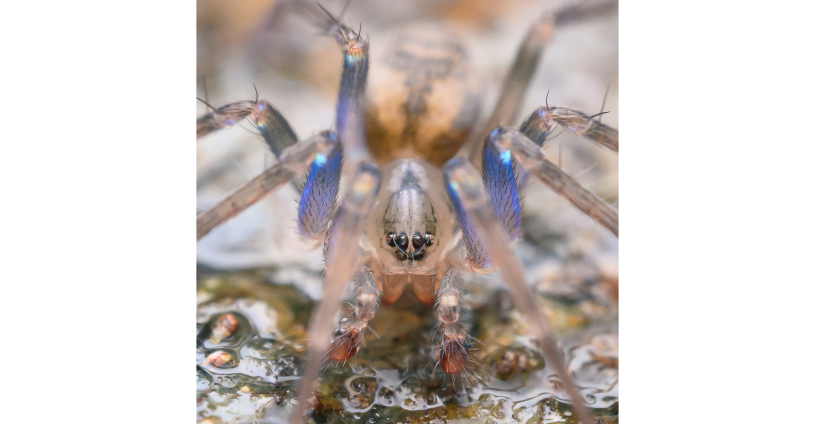
“Don’t let these elusive spiders trick you! Despite looking very similar, all tiny little brown spiders, their diversity is enormous,” says Monjaraz Ruedas. “New imaging technology and genomic studies are helping us to discover the vast diversity of these spiders and other arthropods. We are preserving them in the collections for future studies, as they are threatened by habitat loss.” Their discovery was published in the journal ZooKeys.
A New Old Raccoon
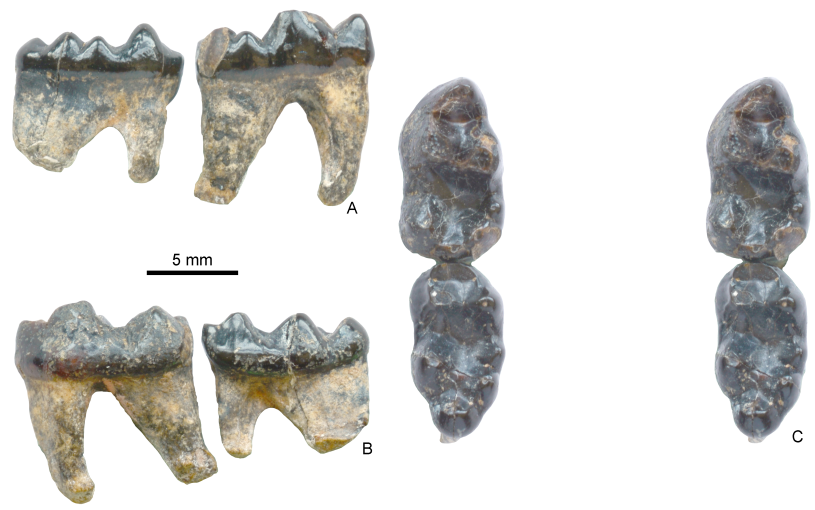
Dr. Xiaoming Wang, Vertebrate Paleontology Curator at NHM, described a new ancient species of a familiar urban animal. Discovered in Stanislaus County, California, Procyon garberi was a little smaller than the raccoons living in the suburbs today. Living around 6.4–6.2 million years ago, this prehistoric raccoon was identified from its primitive teeth. More than any other part of an animal, teeth are extremely hard and tend to preserve better in fossils. Teeth tell us a lot about what animals eat, which means their particular peaks and valleys can differentiate between species even when most of the skeleton doesn’t survive the millions of years of geologic upheaval. While experts like Wang can differentiate between carnivores on sight, describing the new species meant carefully measuring and studying the fossil specimens and comparing them to other fossil and living raccoons. P. garberi is the oldest member of the raccoon genus (Procyon) yet discovered, and the discovery makes California the first known region for these iconic animals. The new species was described in the Bulletin of the Southern California Academy of Sciences.
Nanotyrannus: It's Totally a Thing!
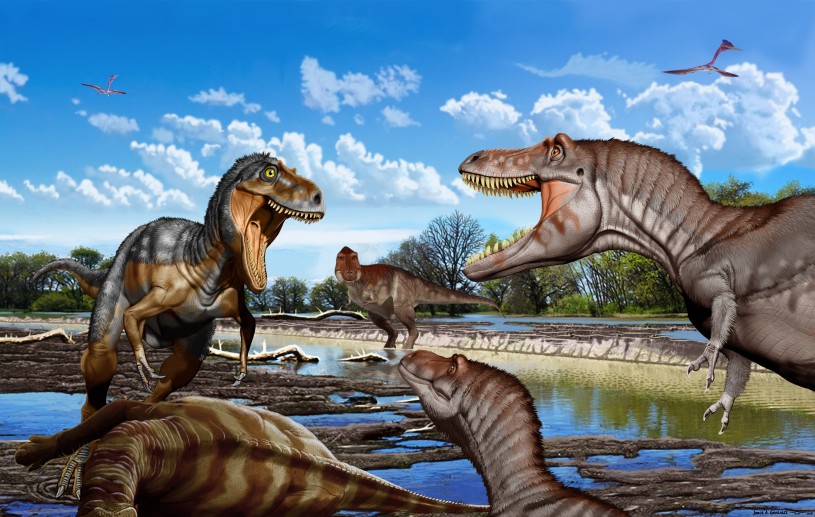
Every species description is an argument, and when it comes to Nanotyrannus, the debate over whether the skull used to initially name it was from a juvenile T. rex or a distinct dinosaur went on for decades. While an earlier paper unaffiliated with NHM examined a different specimen of Nanotyrannus, co-author and Postdoctoral Fellow at the Dinosaur Institute, Dr. Zach Morris, along with a team of researchers from across the country, finally settled the debate by going for the throat bone of the single skull used to first describe Nanotyrannus.
The team examined the throat bone’s microscopic structure, comparing it to distant living relatives and more closely related extinct dinosaurs—including the Dino Hall’s singular T. rex growth series—to show that Nanotyrannus, while smaller, was a fully grown and distinct predator in an ancient ecosystem more diverse than previously imagined. Slightly less than half the size of their massive adult cousins, Nanotyrannus likely competed with juvenile T. rex for prey in Late Cretaceous North America.
A Year Full of Discoveries
Describing new species is only one facet of the research happening every day at NHM and La Brea Tar Pits. For example, researchers at the Tar Pits published several studies using the fossilized junipers and their seeds, among other fossil plants, to illuminate the role plants played during the planet’s most recent rapid climate change event. While NHM researchers uncovered everything from the rather painterly technique birds use to their colorful feathers pop with a secret layer of black or white feathers, to how a rare fish produces bioluminescence, to how ancient land-adapted crocodile relatives ruled the islands of the Caribbean. Explore more of these incredible findings on our stories page, and make sure to sign up for our Naturalist newsletter for all the latest astonishing research happening at our museums.


,_closeup_of_eye_pattern.jpg)